 Pin it
 There's something about the first warm day after winter that makes me crave soup, which sounds backwards until you realize it's about transition, not temperature. Last March, I stood at my kitchen window watching the last patches of snow melt while chopping carrots and parsnips, and it hit me that spring vegetables were still weeks away. So I reached for what the market had: root vegetables, hardy greens, and barley to tie it all together. That bowl became my bridge between seasons, and now whenever the calendar hints at change, I make it again.
I made this for my neighbor one particularly gray February when she'd just moved in, and we sat on her half-unpacked kitchen counter eating it straight from mugs because her proper bowls were still somewhere in a box. She asked for the recipe that same evening, and I realized right then that the best recipes aren't the fancy ones, they're the ones that make people feel less alone on difficult days.
Ingredients
- Leek: Use only the white and light green parts, as the dark green becomes fibrous and bitter; slice it thoroughly to release its sweet, subtle onion-like flavor into the broth.
- Carrots and parsnips: Dice them to roughly the same size so they cook evenly and create that natural sweetness that deepens the soup's character.
- Rutabaga: If you've never cooked with one, it's earthier and slightly sweeter than a turnip; if it intimidates you, potatoes work beautifully as a stand-in.
- Celery: Don't skip it, even though it seems like background support—it builds the foundation of the broth's flavor.
- Cabbage and spinach: These go in near the end so they stay bright and don't dissolve into the soup, keeping some texture and color.
- Pearl barley: Always rinse it first to remove the starch coating; it plumps up gorgeously and gives the soup real body.
- Vegetable broth: Low-sodium matters here because you'll taste everything else; taste as you season at the end.
- Herbs: Bay leaf, thyme, and marjoram create an understated European backbone that ties the vegetables together without shouting.
Tired of Takeout? 🥡
Get 10 meals you can make faster than delivery arrives. Seriously.
One email. No spam. Unsubscribe anytime.
Instructions
- Build your flavor base:
- Heat the olive oil over medium heat and add the leek, carrots, parsnips, rutabaga, and celery all at once. You'll hear them start to sizzle right away, and after about five to seven minutes they'll soften just enough that you can smell their sweetness rising up—that's when you know you're ready for the next step.
- Bring in the aromatic:
- Add the minced garlic and stir constantly for just one minute so it blooms without browning. The smell will shift from earthy to fragrant, signaling that everything's awakening.
- Add the foundation:
- Stir in the rinsed pearl barley, then pour in all eight cups of broth at once. Add your bay leaf and dried herbs, then bring the whole pot to a boil—you'll see it bubble up faster than you'd expect.
- Let time do the work:
- Lower the heat to a gentle simmer, cover the pot, and let it cook for thirty-five minutes while you do something else. Stir it occasionally just to make sure nothing's sticking to the bottom; the barley and root vegetables will transform from firm to tender, and the broth will deepen in color.
- Finish with brightness:
- Add the shredded cabbage and chopped spinach and simmer uncovered for five to seven more minutes—you want the greens wilted but still vibrant, not turned to mush. Taste the soup now and season with salt and pepper until it tastes like itself, then fish out the bay leaf.
- Serve with intention:
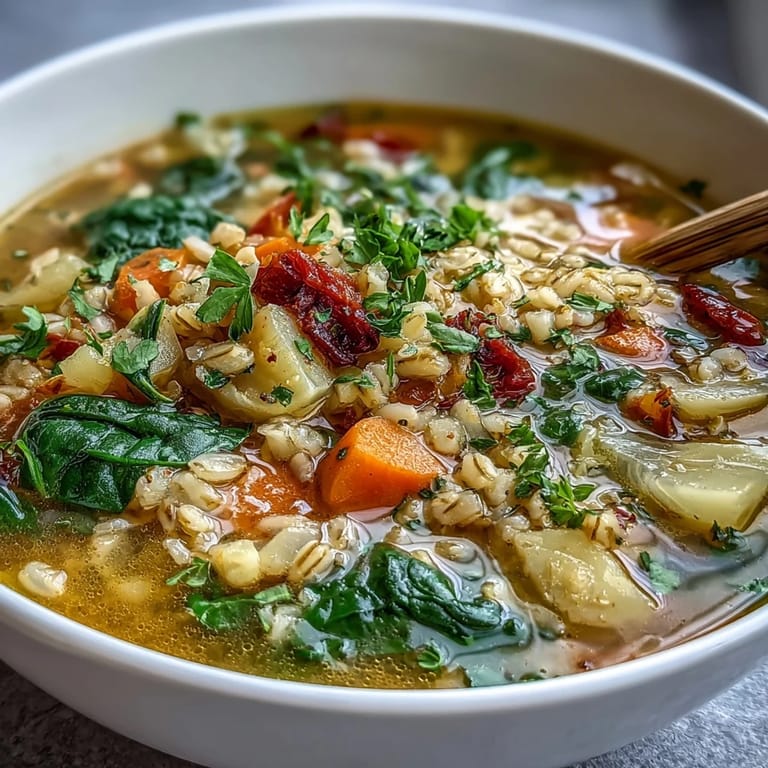
- Ladle it into bowls, scatter fresh parsley on top, and serve it hot with crusty bread alongside. Each spoonful should taste like you took care in making it.
 Pin it
 My favorite moment cooking this soup came when my daughter wandered into the kitchen on a Sunday morning, stopped, and asked if we could have it for dinner. She was eight and usually indifferent to anything vegetable-forward, but something about watching the soup develop—the colors, the smells—had won her over before she even tasted it. We made it together that afternoon, and she insisted on adding the spinach herself because she wanted to see it wilt.
Making It Your Own
This soup has an open architecture, meaning you can swap vegetables based on what's in your market or your mood. I've made it with sweet potatoes instead of rutabaga when I wanted something slightly sweeter, and I've added diced mushrooms when I had them on hand. The barley is what holds it all together, so keep that, but everything else is a conversation you're having with the season.
Why Barley Matters Here
Pearl barley isn't just filler in soup—it's texture, substance, and a slightly nutty note that reminds you of whole grain bread. It absorbs the broth's flavor while releasing its own starch, which naturally thickens the soup without cream or flour. The first time I used it intentionally instead of treating it like an accident, I understood why European cooks have been building soups around it for centuries.
Serving and Storing
This soup tastes better the next day when all the flavors have had time to marry together, so make it ahead without guilt. It keeps beautifully in the refrigerator for four or five days, and it freezes well too if you want to save a portion for a future quiet evening. A drizzle of good olive oil, a squeeze of lemon, or even a small spoonful of sour cream can change the character of a bowl depending on your mood.
- Warm it gently on the stove rather than blasting it in the microwave, which can make the barley tough.
- If it thickens too much after a day or two, thin it with a splash of broth or hot water and taste again.
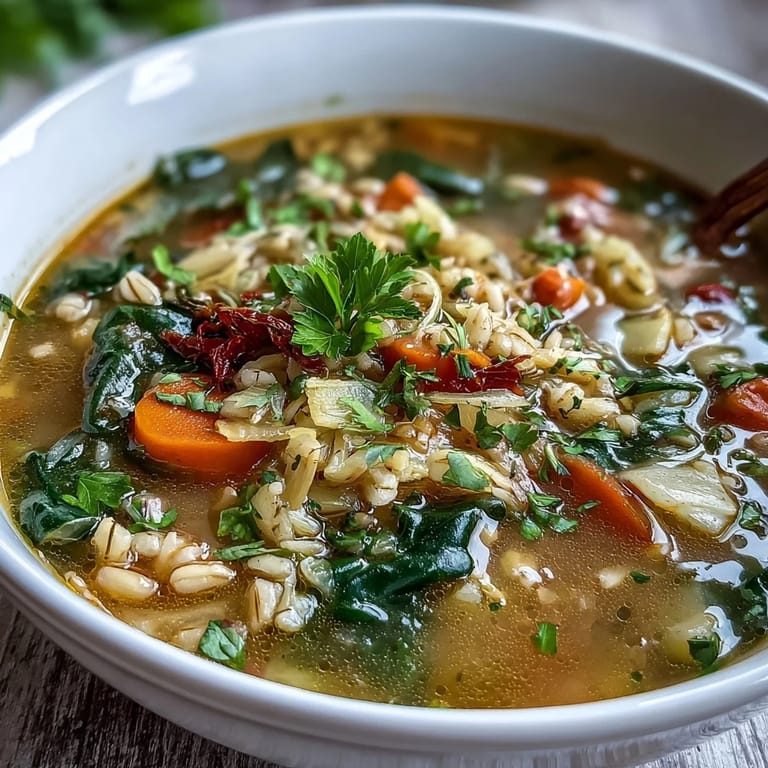
- Fresh parsley stirred in just before eating keeps the soup from feeling heavy.
 Pin it
 This soup has become my seasonal anchor, the thing I make when I need to feel grounded and fed at the same time. It asks very little but gives back generously, which is perhaps the truest definition of comfort food.
Recipe FAQs
- → What types of vegetables work best in this soup?
Root vegetables like leeks, carrots, parsnips, and rutabaga bring hearty texture, while cabbage and spinach add freshness and color near the end.
- → How is barley prepared in this dish?
Pearl barley is rinsed and added to the pot to simmer alongside the vegetables, absorbing flavors and giving a tender chew.
- → Can I add protein to the soup?
Yes, cooked white beans or chickpeas stirred in with the greens provide extra protein and texture without overpowering the flavors.
- → Which herbs enhance this vegetable blend?
Dried thyme, marjoram, and a bay leaf contribute warm, earthy notes that complement the natural sweetness of the root vegetables.
- → What is the best way to serve this soup?
Serve hot with a garnish of fresh parsley and pair with crusty whole-grain bread for a complete, cozy meal.
- → Can any vegetable substitutions be made?
Rutabaga can be swapped for potatoes or sweet potatoes for a slightly different texture and flavor profile.