 Pin it
 There's something about late summer when the farmers market overflows with tomatoes that makes you want to do nothing but simmer them into soup. I was standing in my kitchen one August afternoon, overwhelmed by a bag of sun-warmed tomatoes, when my neighbor popped by and we ended up making this together—no fancy technique, just a pot, some basil from her garden, and the kind of cooking that makes the whole house smell like comfort. That afternoon taught me that the simplest soups are often the ones people remember most.
I made this soup for my son's first day home from university, thinking comfort food might ease the transition back. He came in, caught the smell before even setting his bag down, and suddenly we weren't talking about schedules or distance—we were just two people hovering over bowls of soup, tearing basil leaves, dipping bread. Food has this quiet way of saying what words sometimes can't.
Ingredients
- Ripe tomatoes (1.5 kg): The heart of everything here, and the ripeness truly matters—look for tomatoes that smell sweet and yield slightly to pressure, because canned tomatoes can't capture that fresh, bright flavor that makes this soup sing.
- Yellow onion (1 medium): It softens into silky sweetness as it cooks, building the subtle foundation that lets the tomato shine without overpowering it.
- Garlic (2 cloves): Just enough to add depth without turning this into garlic soup; any more and you'll lose the delicate balance.
- Vegetable broth (750 ml): Choose one you'd actually taste on its own, because it becomes part of the soul of this soup.
- Extra virgin olive oil (2 tbsp, plus more for drizzling): This isn't the place to use ordinary oil—the good stuff matters here, especially in the final drizzle that catches the light in your bowl.
- Fresh basil (1 small bunch): Add it after blending so it stays bright and aromatic rather than cooked into submission; store extra stems in water on the counter to keep them alive longer.
- Sugar (1 tsp, optional): A small trick when tomatoes aren't quite as sweet as summer promises; it's not about making soup sweet, just about balancing the natural acidity.
- Salt and pepper: Add gradually at the end, tasting as you go, because seasoning is personal and depends on your broth.
- Heavy cream or plant-based cream (60 ml, optional): A generous swirl transforms this into something more luxurious, though it's equally beautiful without.
Tired of Takeout? 🥡
Get 10 meals you can make faster than delivery arrives. Seriously.
One email. No spam. Unsubscribe anytime.
Instructions
- Warm the oil and soften the onion:
- Pour olive oil into a large pot and turn the heat to medium, letting it get properly warm before you add the diced onion. Listen for that gentle sizzle—it should sound peaceful, not aggressive—and stir occasionally for about five minutes until the onion turns translucent and loses its sharp edges.
- Wake up the garlic:
- Stir in the minced garlic and stay right there for just one minute, letting it perfume the oil without browning. If it starts to brown, you've waited too long, and it'll taste bitter.
- Add the tomatoes and let them break down:
- Tip in your roughly chopped tomatoes and give everything a good stir, then let it bubble gently for about ten minutes. You'll see the tomatoes release their juice and begin to collapse—this is when the kitchen smells unbelievably good.
- Simmer with broth:
- Pour in your vegetable broth, add sugar if your tomatoes tasted tart, and bring everything to a gentle simmer. Let it bubble quietly for fifteen minutes, uncovered, while the flavors deepen and marry together.
- Blend into velvet:
- Turn off the heat, scatter your fresh basil leaves across the top, and use an immersion blender to puree everything into silky smoothness, working the blender in slow circles to catch all the pieces. If you prefer, carefully transfer batches to a countertop blender instead.
- Season and finish:
- Taste the soup carefully, adding salt and pepper bit by bit until it tastes like the best version of itself. Stir in cream if you're using it, letting it swirl into ribbons.
- Serve with ceremony:
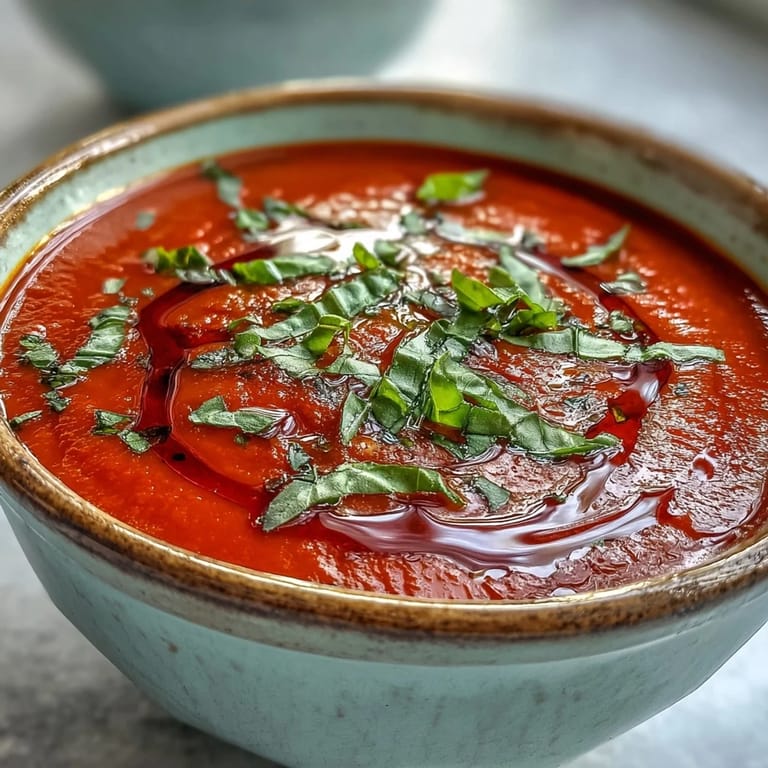
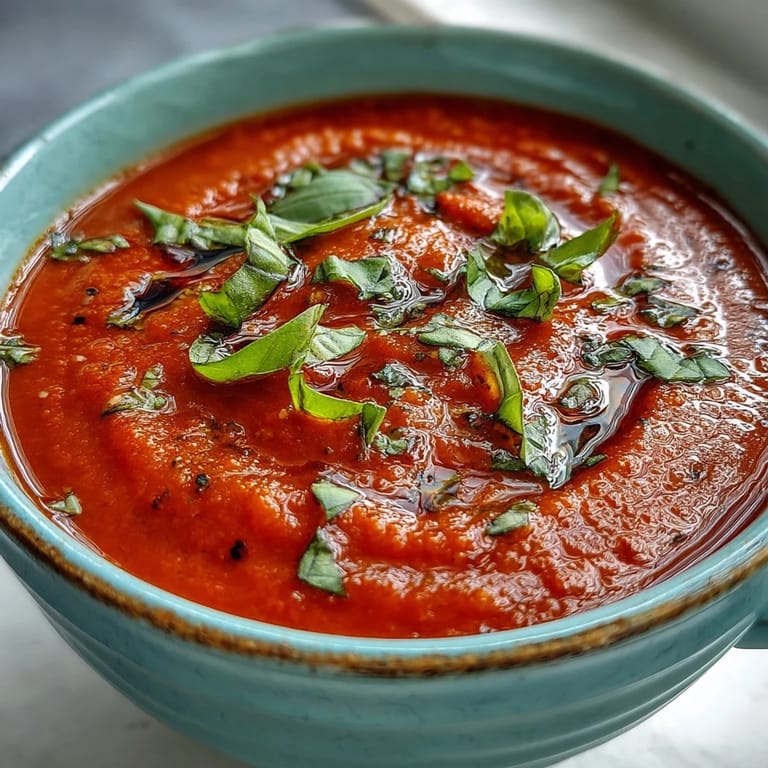
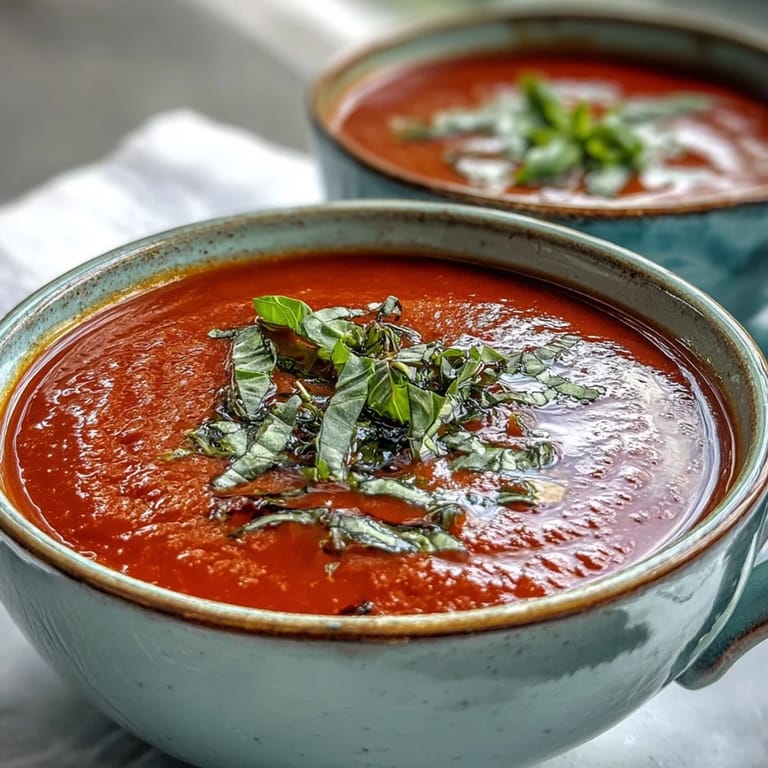
- Ladle soup into warm bowls, drizzle with good olive oil, and tear a few fresh basil leaves over the top, letting them float on the surface like a small gift.
 Pin it
 Last winter, a friend came over struggling with a cold, and I made her this soup while she sat at the kitchen counter in layers of sweaters. Watching her take that first spoonful and visibly relax reminded me that sometimes the most important ingredient is simply showing up for someone with something warm and genuine.
The Tomato Question
The recipe's success hinges almost entirely on tomato quality, which I learned the hard way by attempting this in January with sad, pale supermarket tomatoes. I now make it only during tomato season—late June through September if you're buying them fresh, or I rely on very good canned tomatoes the rest of the year. A small detail that shifts everything: if you have time and your tomatoes feel ordinary, roast them at 200°C for thirty minutes before adding them to the pot, concentrating their flavor and caramelizing their edges into something almost jammy.
Making It Your Own
This soup is a canvas that invites gentle variation without demanding it. Some people add a pinch of red pepper flakes for warmth, others swirl in a touch of balsamic vinegar for complexity, and I once stirred in a small handful of torn mozzarella just before serving, which melted into the hot broth like clouds. The beauty is that none of these changes are necessary—the original is already complete—but they remind you that recipes are suggestions, not commandments.
Serving and Storing
Serve this soup with something to dip—crusty bread, grilled cheese sandwiches, focaccia—because the soup's silky richness calls for something with texture and crunch. It keeps beautifully in the refrigerator for four days and freezes well for up to two months, though fresh basil loses its brightness in the freezer, so I add that final garnish only just before eating. One more thought: if the soup ever thickens too much when reheating, stir in a splash of warm broth or water to bring it back to that pourable consistency.
- Always taste soup at room temperature before serving, because heat makes flavors seem stronger than they actually are.
- Warm your bowls before serving by running them under hot water or leaving them in a low oven, because there's nothing sadder than soup cooling down instantly in a cold bowl.
- This is the kind of soup that tastes better the next day, after flavors have settled and deepened overnight.
 Pin it
 This soup has taught me that cooking doesn't always need to be complicated or time-consuming to matter deeply. There's real magic in respecting simple ingredients and letting them be exactly what they are.
Recipe FAQs
- → Can I use canned tomatoes instead of fresh?
Yes, canned whole tomatoes or crushed tomatoes work perfectly. They're actually more consistent year-round and may require less cooking time since they're already softened when canned.
- → How do I make this soup thicker?
Simmer longer to reduce liquid, add a potato while cooking, or stir in cream. For a natural thickener, blend in a slice of bread or a handful of rice before puréeing.
- → Can I freeze this soup?
Absolutely. Cool completely, then store in airtight containers for up to 3 months. Thaw overnight in the refrigerator and reheat gently. Cream is best added after reheating.
- → What's the best way to achieve the smoothest texture?
An immersion blender works wonderfully directly in the pot. For ultra-smooth results, pass the puréed mixture through a fine-mesh sieve to remove any remaining bits of skin or seeds.
- → How can I reduce the acidity?
Add a teaspoon of sugar as suggested, or include a carrot while cooking. Both naturally balance the tomatoes' acidity without affecting the overall flavor profile.
- → What should I serve with this?
Crusty bread, grilled cheese sandwiches, or garlic crostini are classic pairings. A simple green salad with vinaigrette also complements the rich, velvety texture beautifully.