 Pin it
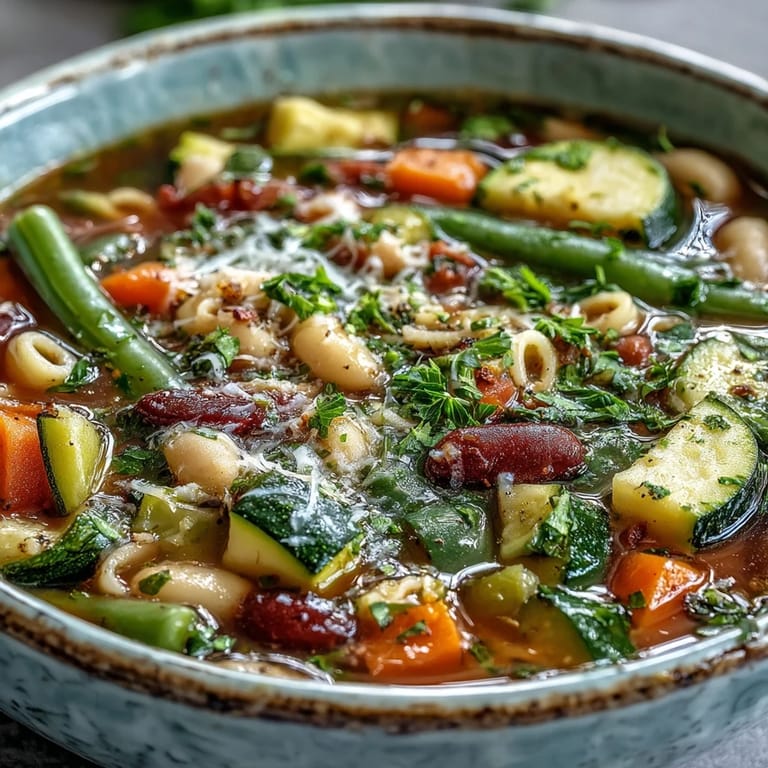
 My neighbor Marco handed me a steaming bowl of minestrone on a gray Tuesday afternoon, and I remember thinking soup shouldn't taste this alive—so many vegetables singing different notes, the pasta tender but still with backbone, and this warmth that made everything else feel manageable. I asked for the recipe, expecting something complicated, but he just shrugged and said the beauty is in how simple it becomes once you understand the rhythm. That conversation changed how I cook soup entirely, and now this is the one I return to when I want to feel both nourished and genuinely happy.
I made this for my friend Emma during her first week of a new job, and watching her eat it with closed eyes reminded me why I love feeding people. She came back three days later asking if I'd teach her, and now it's become our kitchen ritual—she handles the vegetables while I manage the broth, and we talk about everything that matters while the soup quietly comes together.
Ingredients
- Olive oil: Use a quality one you'd actually drink, because it's the foundation and tastes like it matters.
- Yellow onion, carrots, celery: This trio is the scaffolding of flavor—don't skip the sauté step, it's where the magic begins.
- Garlic: Fresh and minced makes all the difference, not the jarred version that sits in the back of your fridge.
- Zucchini and potato: They soften into the broth and create natural body without needing cream.
- Green beans: Add bright texture and color, so choose ones that snap when you bend them.
- Diced tomatoes: Canned is perfectly fine here and often better than fresh in winter months.
- Cannellini beans: Creamy and mild, they absorb the herb flavors without overwhelming anything else.
- Small pasta: Ditalini or elbow works best because they nestle into the vegetables instead of overshadowing them.
- Vegetable broth: This is where the soup's personality lives, so taste it first and choose one you'd actually sip on its own.
- Dried Italian herbs: A blend of oregano, basil, and thyme creates warmth without sharpness.
- Bay leaf: Subtle but necessary, like a quiet friend who keeps conversations grounded.
- Spinach or kale: Added at the end, it wilts into the hot broth and brightens everything with mineral notes.
- Fresh parsley: The finishing garnish that says you care, scattered on top for color and gentle herbal freshness.
- Parmesan cheese: Optional but transforms the bowl into something memorable when you let people add their own.
Tired of Takeout? 🥡
Get 10 meals you can make faster than delivery arrives. Seriously.
One email. No spam. Unsubscribe anytime.
Instructions
- Start the foundation:
- Heat olive oil in your large pot over medium heat, then add diced onion, carrots, and celery together. Let them soften for about 5 minutes, stirring occasionally—you're looking for the onion to turn translucent and smell unmistakably sweet.
- Build the layers:
- Stir in minced garlic, diced zucchini, potato, and green beans, cooking for another 3 minutes until the garlic releases its aroma and the vegetables begin to soften. This is when your kitchen starts smelling like something worth making.
- Bring it together:
- Add the diced tomatoes, drained cannellini beans, vegetable broth, dried Italian herbs, and bay leaf all at once. Stir well and bring everything to a boil—you'll see bubbles breaking the surface energetically.
- Let it simmer:
- Reduce heat to medium-low, cover the pot, and let it bubble gently for 20 minutes so the vegetables become tender and flavors meld into something cohesive. The kitchen fills with this herbaceous warmth that makes you want to stay right there.
- Add the pasta:
- Stir in your small pasta and simmer uncovered for 8 to 10 minutes, stirring occasionally so nothing sticks to the bottom. The pasta will soften while keeping a slight bite, which is exactly what you want.
- Finish with greens:
- Remove the bay leaf, then add spinach or kale and cook for just 2 minutes until wilted into the hot broth. The greens will turn silky and add a final flourish of color.
- Season and serve:
- Taste the soup and add salt and black pepper until it tastes like something you'd choose to eat. Ladle into bowls, scatter fresh parsley on top, and let people add Parmesan cheese if they want—it's their bowl, after all.
 Pin it
  Pin it
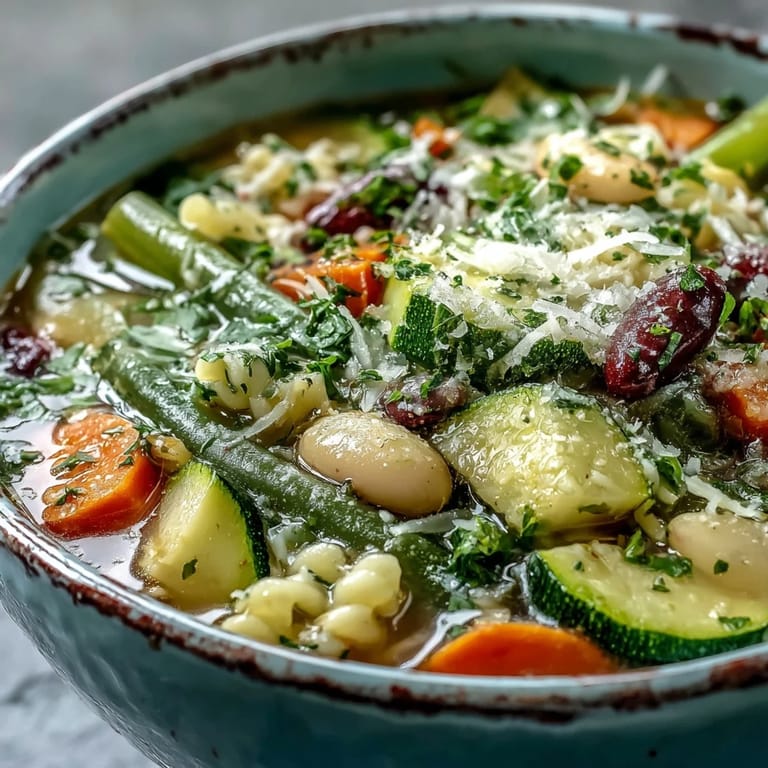
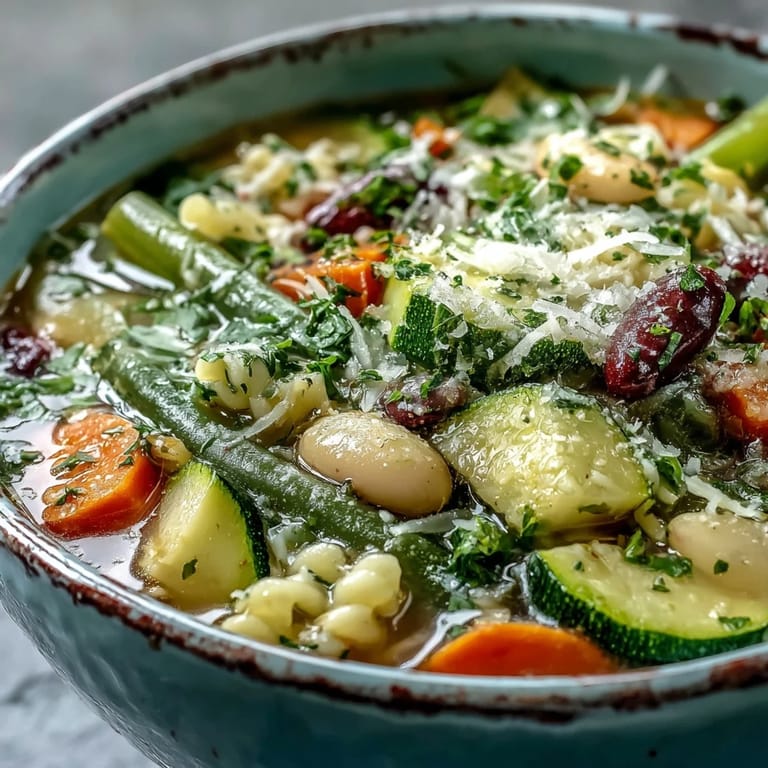
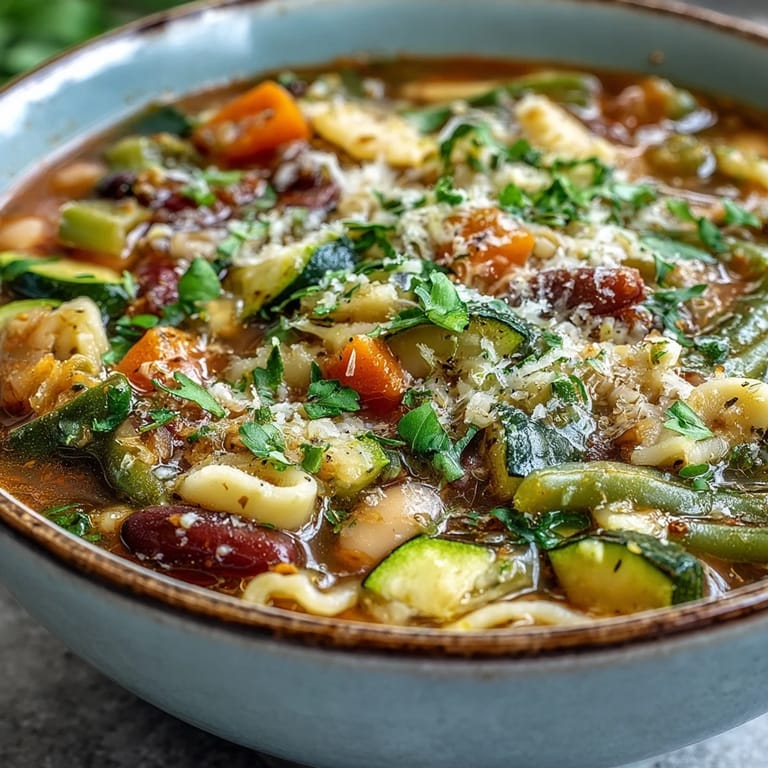
 There's a moment right when you're ladling this soup, steam rising and the spoon heavy with vegetables and broth, when you realize you've made something that feeds more than just hunger. It becomes the excuse to sit together, to slow down, to remember that the best meals are the ones that make you want to linger.
Variations Worth Trying
This soup thrives on flexibility, which is honestly why it's survived centuries of Italian kitchens. In summer, I swap zucchini for fresh corn kernels and add a handful of cherry tomatoes at the end for brightness. Winter calls for diced butternut squash or lacinato kale instead of spinach, and I always add extra herbs because the seasons seem to demand it. One friend adds a can of white beans alongside the cannellini and swears by it, another throws in a small bunch of fresh basil at the very end—the soup never complains, it only gets better.
Why This Soup Never Disappoints
There's something quietly powerful about a soup that tastes complete without being fussy, that nourishes without pretense, and that genuinely improves when made in bigger batches. The vegetables break down just enough to thicken the broth naturally, the beans add protein and substance, and the pasta transforms it from side dish into something satisfying enough for dinner. I've made this when I was tired, when I was happy, when I needed to impress people—and it's shown up for me every single time.
Serving and Storage Wisdom
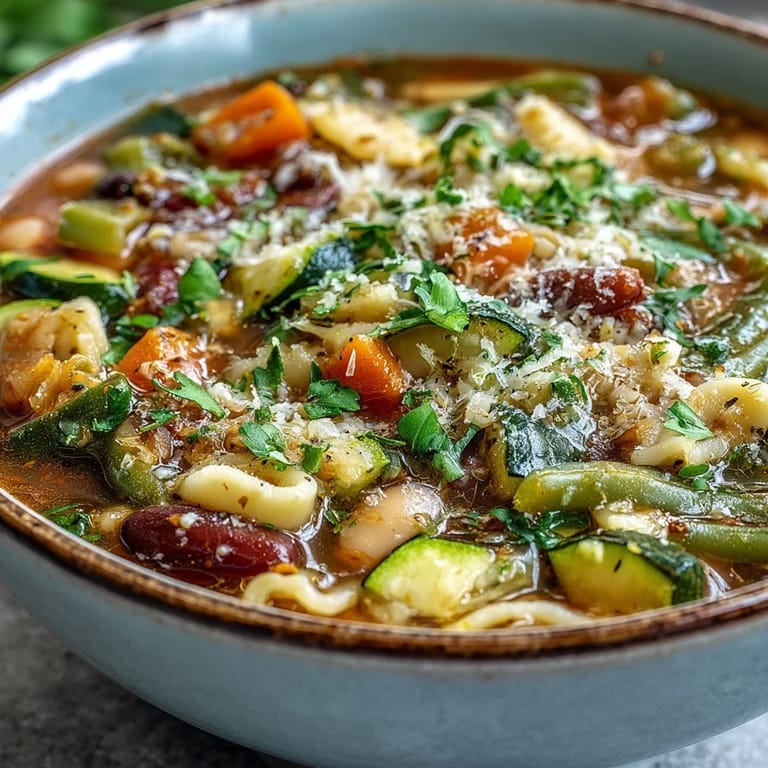
Serve minestrone hot, ideally with crusty bread for soaking up the broth and a generous pour of red wine like Chianti if you're feeling that kind of evening. The soup keeps beautifully in the refrigerator for up to 5 days, though the pasta will continue softening, which some people love and others prefer to remedy by storing pasta separately.
- Fresh parsley and Parmesan should always be added at serving time so they taste bright and individual rather than absorbed into the broth.
- If reheating, add a splash of vegetable broth or water because the pasta and vegetables will have absorbed moisture.
- This soup freezes well for up to 3 months if you leave out the pasta, then cook fresh pasta when you reheat it.
 Pin it
  Pin it
 Make this soup when you want to remember why cooking matters, and you'll understand why Marco shared it with me on that gray afternoon. It's simple, honest food that somehow becomes unforgettable.
Recipe FAQs
- → Can I use different types of beans?
Yes, kidney beans, great northern beans, or borlotti beans work well as substitutes for cannellini beans. You can also use a mix of different beans for added variety and texture.
- → What pasta shapes work best?
Small pasta shapes like ditalini, elbow macaroni, orzo, or small shells are ideal as they cook evenly and are easy to eat with a spoon. Avoid large pasta shapes that may overpower the vegetables.
- → How do I store and reheat leftovers?
Store in an airtight container in the refrigerator for up to 4 days. The pasta will absorb liquid over time, so add extra broth when reheating. Reheat gently on the stovetop or in the microwave until warmed through.
- → Can I make this soup in advance?
Yes, prepare the soup but cook the pasta separately. Store them separately and add the cooked pasta when serving to prevent it from becoming mushy. The soup base can be refrigerated for up to 4 days or frozen for up to 3 months.
- → What vegetables can I add or substitute?
Feel free to add cabbage, peas, bell peppers, or turnips based on seasonal availability. You can also substitute butternut squash for potato or add fresh tomatoes instead of canned for a lighter flavor.
- → How can I make it more filling?
Add extra beans or pasta, include diced pancetta or Italian sausage for non-vegetarian versions, or serve with a side of garlic bread. A drizzle of pesto on top also adds richness and additional protein.