 Pin it
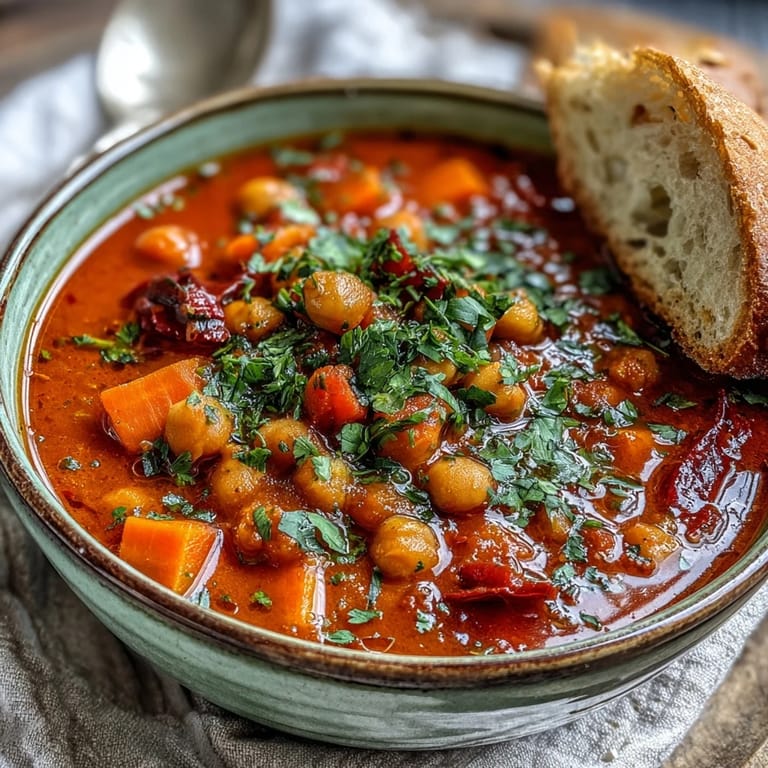
 One October evening, my friend showed up at my door with a bag of groceries and a complaint about the weather turning cold. We didn't have a plan, just some canned chickpeas and spices sitting in my cabinet, so we decided to build something warming from scratch. What emerged was this stew—layered with cumin and cinnamon, rich with tomatoes, and somehow both comforting and surprising with its depth. It's become the kind of recipe I return to when I want something that tastes like care without fussing.
I made this for a potluck in winter, and it was the first thing to empty from the serving pot. Someone asked if there was meat in it, then seemed genuinely surprised when I said no—which tells you everything about how satisfying this stew actually is. That moment stuck with me, the realization that plant-based cooking doesn't mean eating less, just eating differently.
Ingredients
- Chickpeas (two 15 oz cans): Drain and rinse these well to remove the starchy liquid that can muddy the broth; they're your protein anchor and become wonderfully tender as they simmer.
- Onion (1 large): Chop it fine so it softens into the base within minutes, building sweetness that balances the heat.
- Garlic (2 cloves): Mince it small so it distributes evenly and doesn't overpower any single spoonful.
- Carrots and red bell pepper (2 carrots, 1 pepper): Dice both into roughly the same size so they cook at the same pace and add textural variety.
- Canned diced tomatoes (14 oz): Use good quality if you can; the tomatoes are the backbone of your broth, so they deserve attention.
- Vegetable broth (2 cups): The quality matters here too—a flavorful broth makes the entire pot sing.
- Tomato paste (2 tablespoons): This concentrates the tomato flavor and thickens the stew naturally, creating body without cream or oil.
- Olive oil (2 tablespoons): Use good olive oil for sautéing; it carries the flavor of those spices into the background.
- Cumin, smoked paprika, coriander, turmeric, cinnamon (1 tsp cumin, 1 tsp paprika, 1/2 tsp coriander, 1/2 tsp turmeric, 1/2 tsp cinnamon): Toast these together briefly so they bloom and release their essential oils—this one minute changes everything.
- Chili flakes (1/2 teaspoon): This brings the heat; start here and add more if you like things spicier, but remember you can't take it out once it's in.
- Bay leaf (1): Drop this in early and fish it out before serving; it adds a subtle herbal note that makes the whole stew taste more intentional.
- Lemon juice and fresh herbs: The lemon brightens everything at the end, while cilantro or parsley adds a clean, grassy finish that prevents the stew from feeling heavy.
Tired of Takeout? 🥡
Get 10 meals you can make faster than delivery arrives. Seriously.
One email. No spam. Unsubscribe anytime.
Instructions
- Warm your oil and soften the onion:
- Pour the olive oil into your pot over medium heat and let it heat for a moment. Add the chopped onion and let it sit for a minute before stirring, so the heat can start breaking down its sharpness. After 4 to 5 minutes, it should smell sweet and look translucent at the edges.
- Build the vegetable base:
- Stir in the minced garlic, diced carrots, and bell pepper. The pot will smell suddenly alive and fresh. Keep stirring for another 3 to 4 minutes until the vegetables soften slightly and the garlic loses its raw edge.
- Wake up the spices:
- Add cumin, smoked paprika, coriander, turmeric, chili flakes, and cinnamon all at once. The kitchen will fill with an aroma that makes you understand why these spices have been prized for centuries. Stir constantly for just 1 minute so they toast lightly in the hot oil without burning.
- Build the stew base:
- Stir in the tomato paste first, letting it coat the vegetables and spices for a moment. Then add the canned tomatoes, drained chickpeas, vegetable broth, and bay leaf. Stir well and watch as it comes together into something that actually looks like stew.
- Bring it to a boil and simmer:
- Turn up the heat until you see bubbles breaking the surface consistently, then lower it back down and cover the pot. Simmer for 25 minutes, stirring occasionally so nothing sticks to the bottom. The longer it sits, the more the flavors meld and deepen.
- Finish uncovered and thicken:
- Remove the lid, taste carefully, and season with salt and pepper. Simmer uncovered for 5 more minutes so some liquid evaporates and the stew becomes less soupy and more cohesive.
- Brighten and serve:
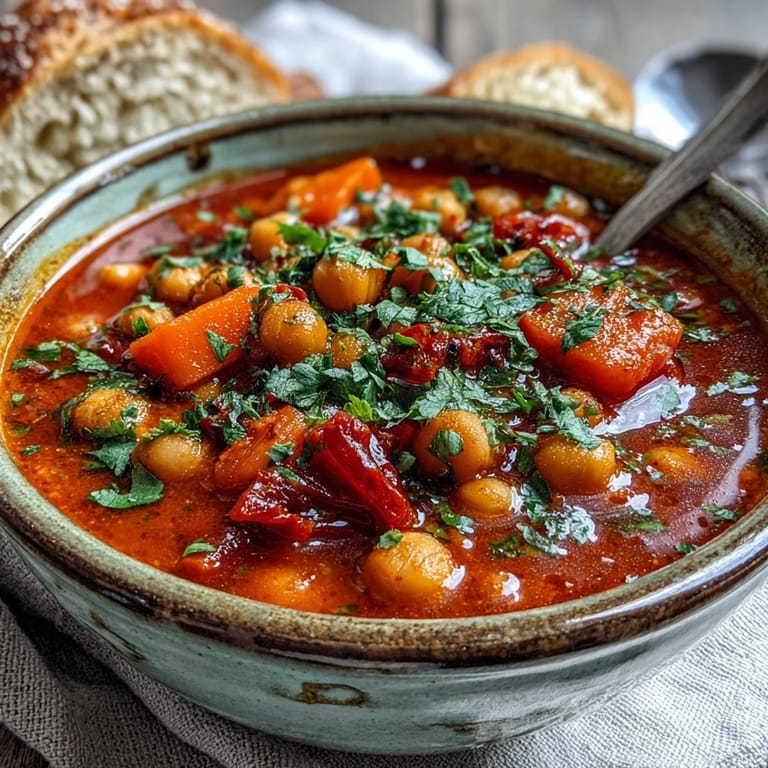
- Fish out the bay leaf carefully. Squeeze in the lemon juice and stir in the fresh cilantro or parsley, which will add a color that makes the stew look alive. Taste one more time and adjust the heat or salt if needed.
 Pin it
  Pin it
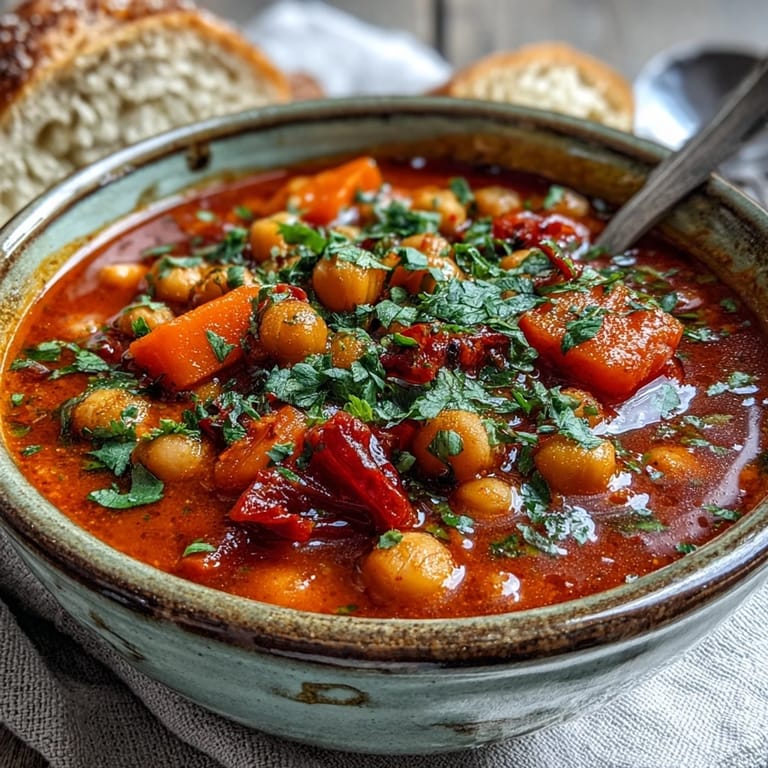
 My partner hates cilantro and loves parsley instead, so that's what we always use now. It's funny how a recipe becomes personal once you've made it a few times—you stop following the instructions and start following your own taste.
Why This Stew Works
The genius of this stew is in its layering. You start with a simple vegetable base, add warmth and depth with spices, then build body with tomatoes and chickpeas. The broth doesn't need cream or butter because the combination of tomato paste, canned tomatoes, and chickpeas creates natural richness. It's a lesson in how the right spice balance can make something humble feel luxurious.
Storage and Reheating
This stew improves over time, which means it's perfect for making on Sunday and eating through the week. The flavors deepen and meld, and reheated portions taste better than the day you made them. Store it in an airtight container in the fridge for up to four days, or freeze it in portions for up to three months.
Ways to Serve and Adapt
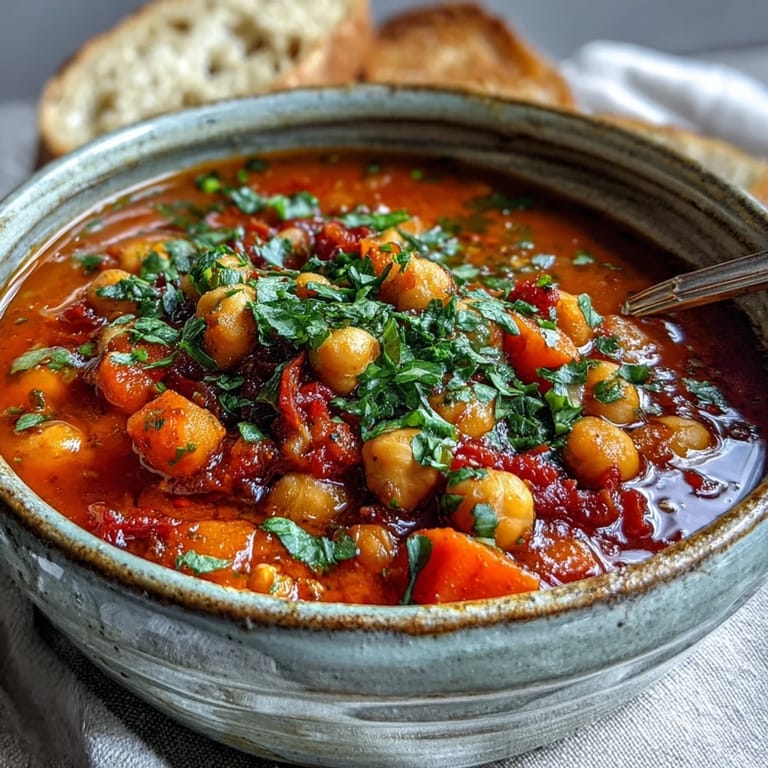
This stew is flexible enough to fit any meal plan or preference. Ladle it over steamed rice to make it more filling, or serve it with crusty bread for soaking up the broth. Some evenings I've spooned it over couscous, and other times I've eaten it straight from the bowl when I wanted something light but satisfying. If you want extra heat, dice a jalapeño and add it with the other vegetables. If cilantro isn't your thing, fresh parsley brings the same brightness without the soapy taste some people experience. You can also add a diced jalapeño for more heat, stir in some spinach or kale during the last few minutes of cooking, or finish it with a dollop of plain yogurt if you're not strictly vegan.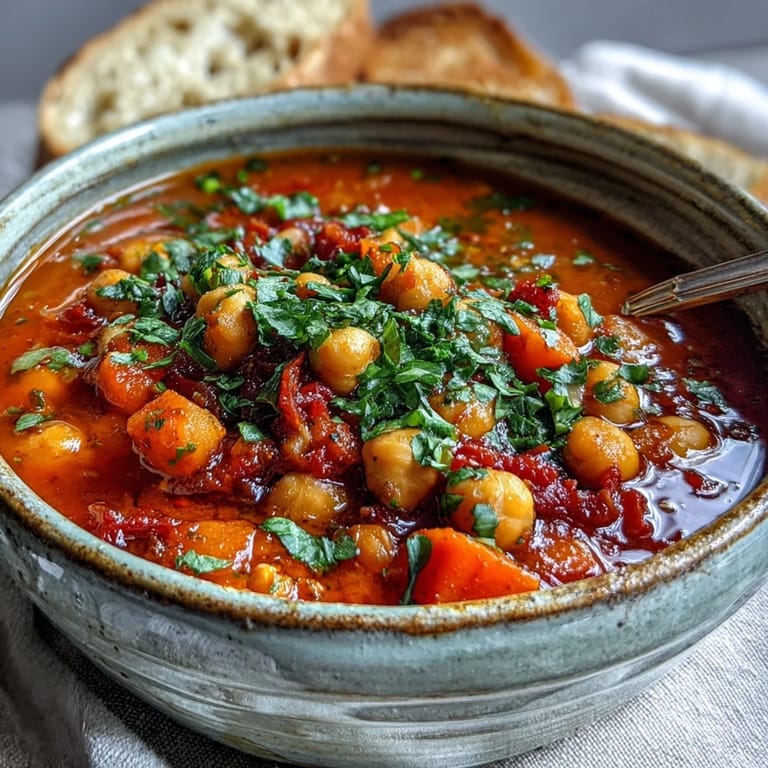 Pin it
  Pin it
This stew has become my recipe for nights when I need comfort but also want to feel like I'm eating something intentional and alive. Make it once and it becomes yours.
Recipe FAQs
- → Can I use dried chickpeas instead of canned?
Yes, you can substitute dried chickpeas. Soak 1 cup dried chickpeas overnight, then cook until tender before adding to the stew. This will add about 1-2 hours to your preparation time.
- → How can I make this stew thicker?
For a thicker consistency, mash some of the chickpeas against the pot with a wooden spoon, or simmer uncovered for an additional 10 minutes. You can also add a tablespoon of cornstarch mixed with water.
- → What can I serve with this stew?
This stew pairs beautifully with crusty bread, fluffy couscous, basmati rice, or quinoa. A dollop of yogurt (dairy or plant-based) and fresh herbs make excellent toppings.
- → How long does this keep in the refrigerator?
Store the stew in an airtight container in the refrigerator for up to 5 days. The flavors develop and intensify over time, making leftovers even more delicious.
- → Can I freeze this chickpea stew?
Absolutely. This stew freezes beautifully for up to 3 months. Cool completely before transferring to freezer-safe containers. Thaw overnight in the refrigerator and reheat gently on the stovetop.
- → What other vegetables can I add?
Feel free to add spinach, kale, zucchini, or butternut squash. Leafy greens should be stirred in during the last 5 minutes of cooking, while heartier vegetables can be added with the carrots.