 Pin it
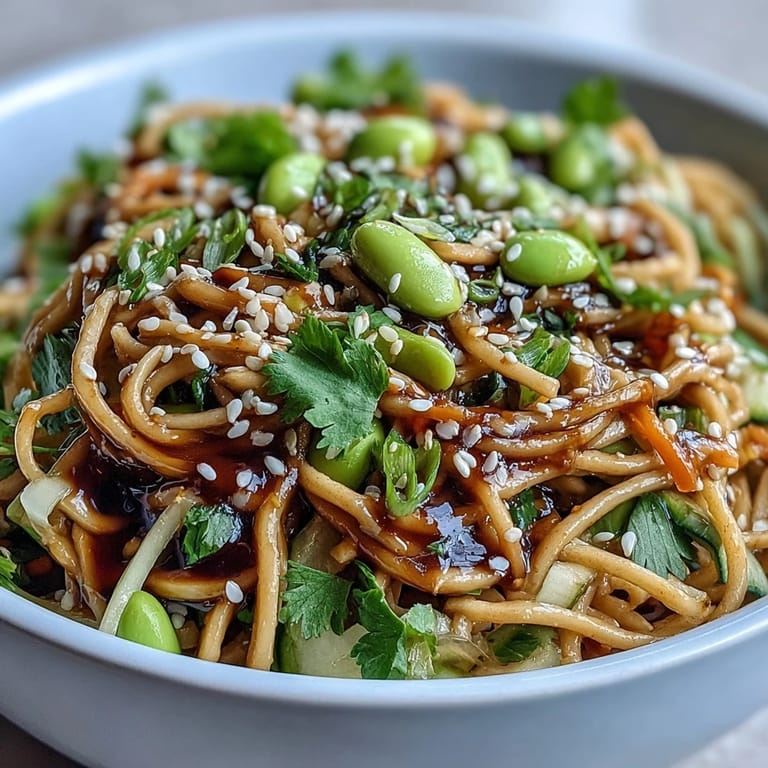
 There's something almost meditative about watching soba noodles hit cold water after their quick boil—they go from limp to springy in seconds, and suddenly lunch feels intentional. I discovered this bowl on a sweltering afternoon when my kitchen felt too warm for anything hot, and I needed something that wouldn't leave me sluggish at my desk. The sesame dressing changed everything; it's tangy, nutty, and somehow makes vegetables taste like you planned to love them.
I made this for my neighbor who mentioned she was tired of sad desk lunches, and watching her eyes light up when she tasted it reminded me that the best meals are often the simplest ones. She's been making it ever since and keeps texting me variations—last week she added crispy tofu and it sounded brilliant.
Ingredients
- Dried soba noodles (250 g): These aren't your typical pasta—they're made from buckwheat flour, which gives them a slightly earthy, nutty flavor and a chewy texture that holds up beautifully to cold dressing. Look for 100% buckwheat if you're avoiding gluten.
- Shelled edamame (1 cup): Whether fresh or frozen, these little soybeans add protein and a subtle sweetness; frozen actually work wonderfully here since you're blanching them anyway.
- Cucumber and carrots: The julienne cut (thin matchstick shape) isn't just for show—it creates more surface area so every bite has that satisfying crunch and more dressing contact.
- Scallions (2, thinly sliced): These add a sharp freshness that cuts through the richness of the sesame oil; don't skip them even if you think onions aren't your thing.
- Toasted sesame seeds (2 tbsp): Toast them yourself if you have time—the difference between pre-toasted and freshly toasted is the difference between good and unforgettable.
- Fresh cilantro or mint (1/4 cup): Optional but absolutely worth hunting down; they brighten the whole bowl with unexpected herbal notes.
- Soy sauce or tamari (3 tbsp): This is your umami backbone—don't water it down, and if you need gluten-free, tamari is your reliable friend.
- Rice vinegar (2 tbsp): The gentle acidity of rice vinegar won't overwhelm like regular vinegar would; it plays nicely with everything else.
- Toasted sesame oil (1 tbsp): A little goes a long way here—this is concentrated flavor, and using the toasted version matters because it's deeper and more fragrant.
- Tahini or smooth peanut butter (1 tbsp): This creates creaminess and body in the dressing without dairy; it's the secret that makes people ask what your ingredient is.
- Honey or maple syrup (1 tbsp): Just enough sweetness to balance the salty and tangy elements so nothing tastes one-dimensional.
- Fresh ginger (1 tsp grated) and garlic (1 small clove minced): These two together create a warm backdrop that makes you want to keep eating bowl after bowl.
- Water (1 tbsp, plus more as needed): Keep this handy to adjust the dressing consistency—some days the tahini is thicker, and you want to be ready.
Tired of Takeout? 🥡
Get 10 meals you can make faster than delivery arrives. Seriously.
One email. No spam. Unsubscribe anytime.
Instructions
- Bring water to a rolling boil for the noodles:
- You want it really bubbling so the soba cooks evenly and doesn't turn to mush. While that's heating, you can prep your vegetables.
- Cook the soba noodles:
- Follow the package directions exactly—usually 4 to 5 minutes for dried soba, though some brands are faster. You'll know they're ready when they're tender but still have a slight chew to them.
- Drain and shock with cold water:
- This stops the cooking immediately and prevents them from clumping together as they cool. A colander and a kitchen sink are your best friends here.
- Blanch the edamame while the noodles cook:
- Drop them into salted boiling water for just 2 to 3 minutes, then drain and set aside. They should still be bright green and tender, not mushy.
- Whisk the sesame dressing in a small bowl:
- Start with the soy sauce, vinegar, sesame oil, and tahini—these are your foundation. Add the honey, ginger, and garlic, then whisk until it's smooth and cohesive, adding water a splash at a time until it flows like a pourable salad dressing.
- Prepare your vegetables:
- Julienne the cucumber and carrots into thin matchsticks, then thinly slice the scallions. Having everything prepped before assembly means your bowl comes together in seconds.
- Toss the noodles with half the dressing:
- This distributes the flavor evenly and ensures every strand gets coated rather than just the top ones. Use your hands or two forks and don't be shy.
- Divide noodles among four bowls:
- Arrange them as a base, creating a little nest that can hold all the toppings. This takes 30 seconds but makes the dish feel intentional.
- Top each bowl with edamame, vegetables, and remaining dressing:
- Layer them so every forkful will include several components—this is where the bowl goes from simple to craveable. Drizzle the remaining dressing evenly across the top.
- Finish with sesame seeds and fresh herbs:
- The sesame seeds add nutty crunch, and the herbs add a final bright note that makes you realize how complete this dish is.
- Serve immediately:
- These bowls are best eaten within minutes of assembly while everything still has its texture and temperature contrast.
 Pin it
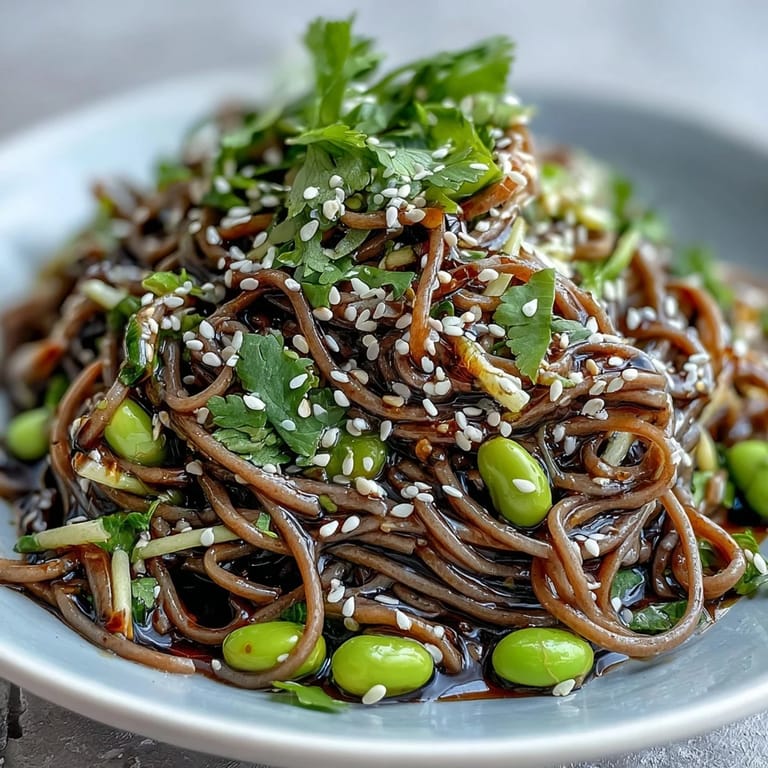
 My partner came home one evening to find me standing at the counter with this bowl, looking completely content, and asked why I looked so peaceful about dinner. I realized it was because there were no complaints cooking it, no ingredients I doubted, just clean flavors and a bowl that felt like nourishment instead of obligation.
Why Cold Noodle Bowls Changed How I Eat
Before this, I treated noodles as something that needed to be piping hot to feel like a proper meal, but cold soba taught me that temperature is just one variable. A chilled noodle bowl in the heat of summer or even on a regular afternoon feels lighter but somehow more satisfying, like you're eating vegetables that happen to come with noodles rather than noodles buried under toppings. The sesame dressing brings enough richness that you don't miss anything.
Building Your Own Variations
This bowl is honestly a template more than a strict recipe, which is why I keep coming back to it. You can swap the vegetables based on what's in your crisper drawer or what's on sale at the market—snap peas, bell peppers, radishes, even shredded beets bring their own energy to the bowl. Protein is easy to add too: grilled tofu, a soft-boiled egg, grilled chicken, or even some leftover rotisserie bird all make perfect sense here.
Dressing Strategy and Make-Ahead Magic
Here's something I learned by accident: if you make the dressing the night before and store it in a glass jar, the flavors meld together and taste even rounder and more complex by the next day. The soba noodles can be cooked several hours ahead and kept in the fridge, and vegetables prep beautifully in advance too. On mornings when you want breakfast or lunch sorted before your day starts, this is your answer—assemble it fresh, drizzle the dressing, and you're done.
- Toast your own sesame seeds in a dry skillet for two minutes if you can; the aroma alone is worth the minimal effort.
- If the noodles seem to stick together after chilling, toss them with just a touch of sesame oil to separate them.
- Taste the dressing before you dress the noodles—if it needs salt or acid, adjust it now rather than wishing you had later.
 Pin it
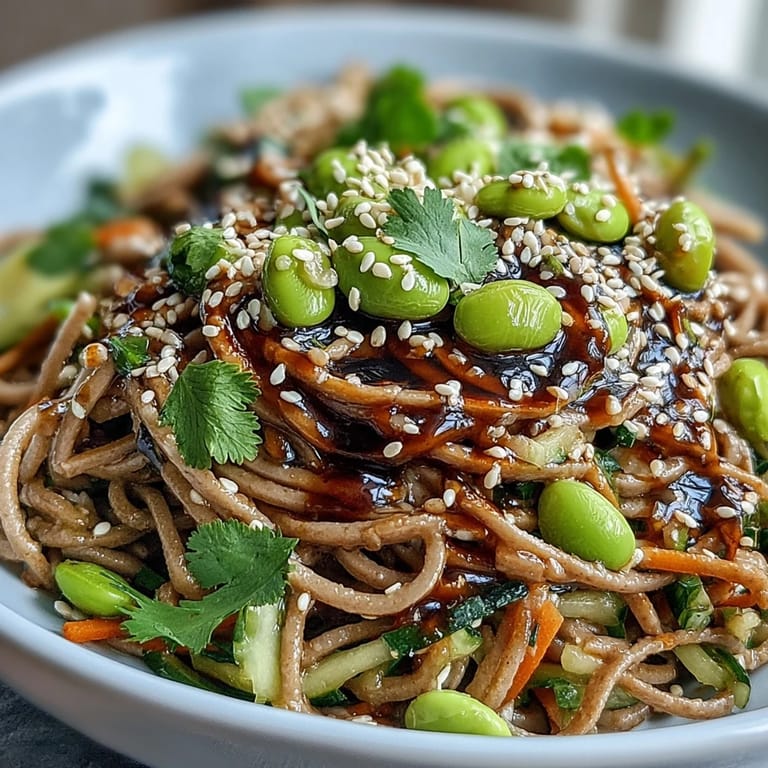
 This bowl has become my answer to those evenings when I want to eat something that tastes intentional and feels nourishing without any drama. It's one of those recipes that quietly became essential in my rotation.
Recipe FAQs
- → What makes soba noodles special?
Soba noodles are made from buckwheat flour, giving them a nutty flavor and chewy texture. They're also a good source of protein and fiber compared to regular wheat noodles.
- → Can I make this ahead of time?
Yes, you can prepare the vegetables and dressing up to 2 days in advance. Store them separately and toss with freshly cooked noodles when ready to serve.
- → How do I prevent soba noodles from sticking?
Rinse the cooked noodles thoroughly under cold water immediately after draining. This removes excess starch and prevents them from clumping together.
- → What can I use instead of edamame?
Shelled peas, chickpeas, or diced grilled tofu work well as alternatives. For extra protein, try adding shredded chicken or a soft-boiled egg.
- → Is this dish served hot or cold?
This bowl is typically served at room temperature or chilled, making it perfect for warm weather. However, you can also serve it warm if preferred.