 Pin it
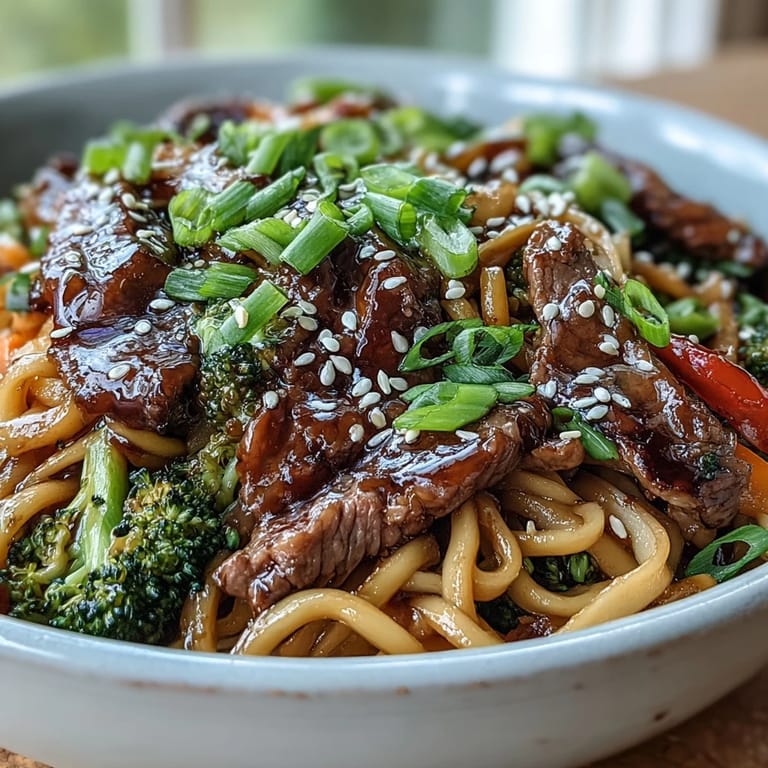
 One rainy Tuesday evening, I stood in front of my fridge staring at leftover flank steak and a bag of wilting vegetables, too tired to order takeout but craving something bold and comforting. I remembered a noodle dish I'd had at a tiny Korean fusion spot years ago, the kind of meal that made you forget you were eating in a strip mall. Within twenty minutes, my kitchen smelled like toasted sesame and caramelized soy, and I was twirling glossy noodles around my fork, wondering why I'd ever thought this kind of cooking was complicated. That night, this recipe was born from hunger, laziness, and a little bit of luck.
The first time I made this for friends, I panicked halfway through because I thought I'd oversalted the sauce. But when I tasted a noodle straight from the pan, that perfect balance of salty, sweet, and nutty hit me all at once. My friend Sam, who usually critiques everything, went silent for three bites before asking if I'd secretly ordered it. I didn't tell him I'd been winging it the whole time.
Ingredients
- Rice noodles: These slippery, silky strands are the backbone of the dish, soaking up sauce without turning mushy if you don't overcook them.
- Flank steak: Slicing it thin against the grain is the difference between tender bites and chewy rubber, and this cut stays juicy even over high heat.
- Broccoli florets: They add a slight bitterness that balances the sweet sauce, and their little trees catch pockets of flavor in every bite.
- Bell pepper: I prefer red or yellow because they turn almost jammy when they hit the hot pan, adding a pop of color and natural sweetness.
- Carrot: Julienned carrots cook fast and bring a gentle crunch that keeps the texture interesting.
- Green onions: Chopped fresh at the end, they add a sharp, grassy note that wakes up the whole bowl.
- Garlic and ginger: These two together create that instant aroma that makes everyone wander into the kitchen asking what smells so good.
- Soy sauce: The salty, umami backbone of the sauce, it coats everything with deep savory flavor.
- Brown sugar: It melts into the soy sauce and caramelizes slightly in the pan, giving the dish a glossy, restaurant-quality sheen.
- Sesame oil: Just a tablespoon perfumes the entire skillet with toasted nuttiness that you can smell from the next room.
- Vegetable oil: High smoke point means you can crank the heat without setting off the smoke alarm.
- Sesame seeds: They add a tiny crunch and a whisper of toasted flavor that makes the dish feel finished.
Tired of Takeout? 🥡
Get 10 meals you can make faster than delivery arrives. Seriously.
One email. No spam. Unsubscribe anytime.
Instructions
- Prep the noodles:
- Boil the rice noodles until they're just tender, then drain and rinse them under cold water to stop the cooking. This keeps them from clumping into a gummy brick later.
- Sear the beef:
- Heat your skillet until it's almost smoking, then add the beef in a single layer so it browns instead of steams. Let it sit undisturbed for a minute before flipping, then pull it out while it's still a little pink inside.
- Bloom the aromatics:
- Toss the garlic and ginger into the hot pan and stir constantly for thirty seconds until the smell fills your kitchen. Don't walk away or they'll burn and turn bitter.
- Stir-fry the vegetables:
- Add the broccoli, bell pepper, and carrot, then keep everything moving in the pan so they cook evenly. You want them tender but still snappy, not soft and sad.
- Mix the sauce:
- While the vegetables sizzle, whisk together soy sauce, brown sugar, and sesame oil in a small bowl until the sugar dissolves completely. It should look smooth and glossy.
- Bring it all together:
- Return the beef to the skillet, pour the sauce over everything, and toss until every piece is coated. Add the noodles and use tongs to gently lift and fold them through the beef and vegetables until everything is hot and glistening.
- Garnish and serve:
- Scatter green onions and sesame seeds over the top right before serving. The fresh onions cut through the richness, and the seeds add a final whisper of crunch.
 Pin it
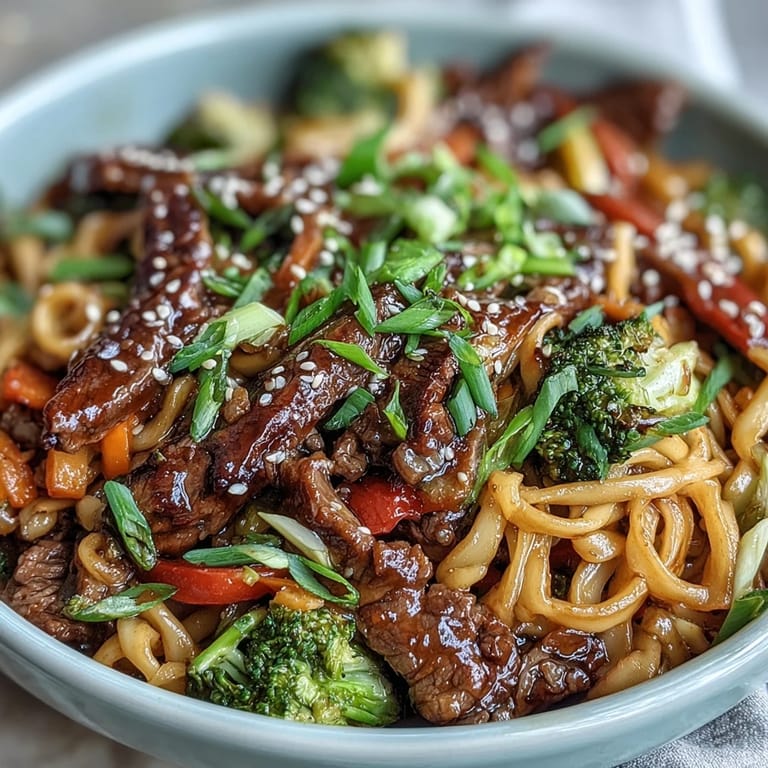
 I remember serving this to my mom on a night she'd had a long shift at work. She sat at the table in silence, twirling noodles and sighing between bites, and when she finally looked up, she said it tasted like the kind of meal that fixes a bad day. I've never forgotten that, and now I make it whenever someone I care about needs a little comfort in a bowl.
How to Slice Flank Steak Perfectly
Flank steak has long muscle fibers running in one direction, and if you slice with them, each bite becomes a workout for your jaw. I learned this the hard way after serving chewy beef to my brother, who politely asked if I'd cooked boot leather. Now I always look for the grain, then turn my knife perpendicular and slice thin strips across those fibers. If you're not sure which way the grain runs, freeze the steak for fifteen minutes first so it firms up and the lines become obvious.
Making It Your Own
This recipe is more of a template than a rigid rule, and I've thrown in snap peas, zucchini, mushrooms, and even shredded cabbage depending on what's in my crisper drawer. If you want heat, a teaspoon of gochujang or a drizzle of sriracha stirred into the sauce transforms it into something with a slow-building kick. I've also swapped the beef for chicken thighs, shrimp, or crispy tofu, and every version has been devoured within minutes. The key is keeping the sauce ratio the same so everything stays glossy and balanced.
Storage and Reheating
Leftovers live in an airtight container in my fridge for up to three days, and honestly, they taste even better the next day when the noodles have had time to drink up the sauce. I reheat them in a skillet over medium heat with a splash of water to loosen everything up, stirring gently so the noodles don't break apart. Microwaving works in a pinch, but the skillet method brings back that just-cooked texture and keeps the vegetables from turning to mush.
- Add a handful of fresh herbs like cilantro or Thai basil right before serving for a bright, herbal lift.
- If the sauce thickens too much in the fridge, a tablespoon of water or broth will bring it back to life.
- Don't skip the sesame seeds on top because that little bit of crunch makes every bite feel intentional.
 Pin it
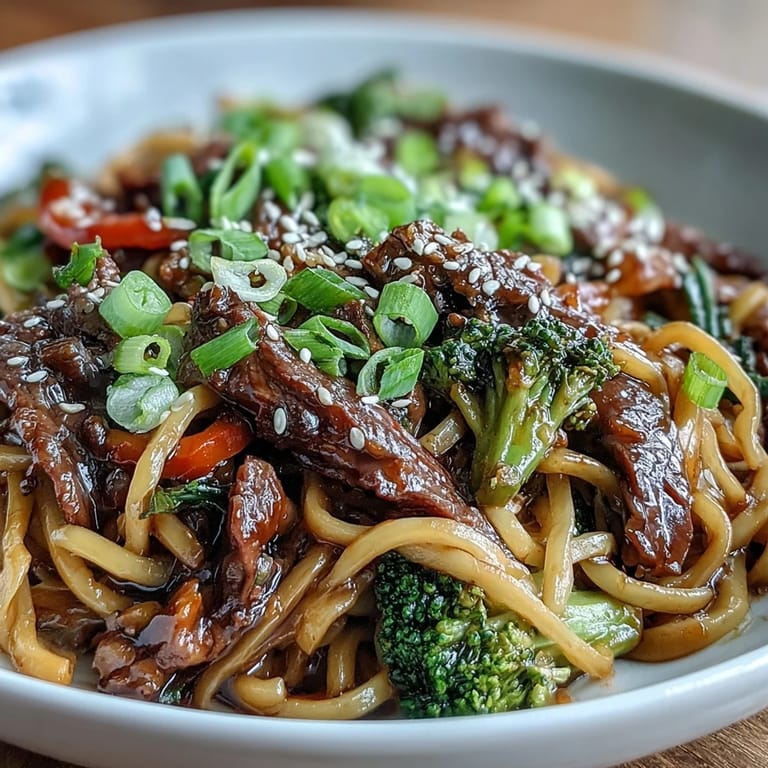
 This dish has become my go-to for weeknights when I'm too tired to think but still want to eat something that feels like a hug. I hope it does the same for you.
Recipe FAQs
- → What cut of beef works best?
Flank steak sliced thinly against the grain delivers ideal tenderness. Sirloin or skirt steak also work well when cut properly.
- → Can I prepare this ahead?
Yes, slice vegetables and beef in advance. Cook rice noodles just before serving. Reheat everything together gently.
- → How do I prevent mushy noodles?
Cook rice noodles according to package directions, drain immediately, and toss with the sauce at the very end just until coated.
- → What vegetables can I add?
Snap peas, zucchini, baby corn, bok choy, or mushrooms all complement the beef beautifully. Use whatever looks fresh.
- → Is this dish spicy?
The base version is savory and sweet. Add sriracha, gochujang, or red pepper flakes to the sauce if you prefer heat.