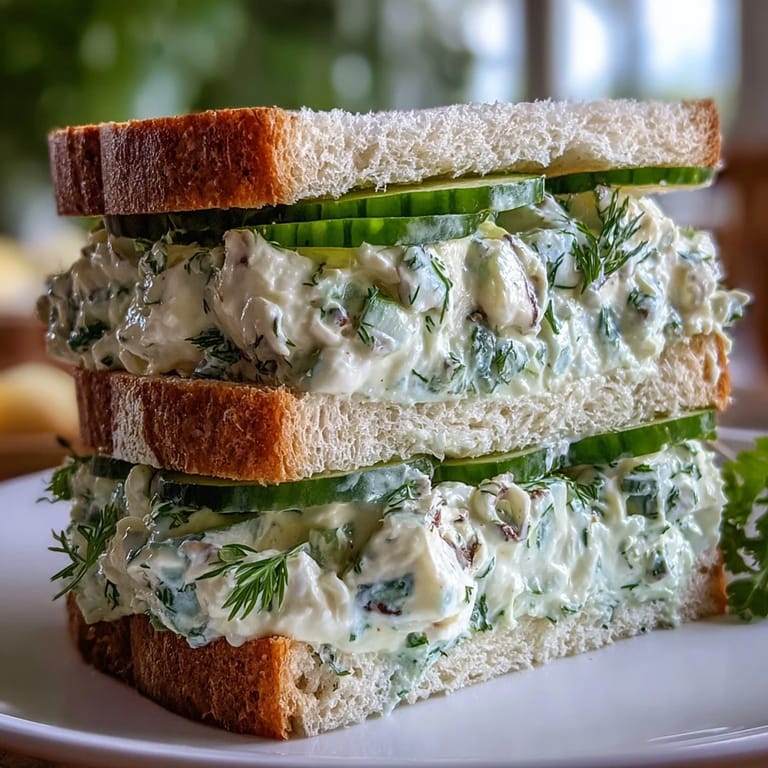
 Pin it
 My grandmother pulled these sandwiches from the refrigerator every Derby Day, their pale green tops catching the afternoon light like tiny edible treasures. I watched her press the cucumber dry in a towel with such care, as if the sandwich's entire fate depended on that single squeeze. The first time I made them myself, I skipped that step and ended up with a soggy disaster—a lesson I've never forgotten. Now whenever I taste that cool, herbaceous filling against the soft bread, I'm transported back to her kitchen with the radio playing and the whole house smelling like fresh dill.
There's something magical about setting out a platter of these at a gathering and watching people's faces light up—they taste far more complicated than they are. I've served them at everything from garden parties to last-minute brunches, and they've never disappointed. A friend once told me these reminded her of her childhood summers, and suddenly my kitchen became a bridge between generations. That's when I realized these aren't just sandwiches; they're a conversation starter wrapped in bread.
Ingredients
- English cucumber: Use one that's firm and unblemished, and peel it completely before seeding—the watery center is the enemy of a perfect texture.
- Cream cheese: Soft and spreadable is non-negotiable; cold cream cheese will tear the delicate bread.
- Mayonnaise: Two tablespoons might seem small, but it adds richness that makes the filling silky rather than pasty.
- Fresh dill and chives: These aren't optional flavor boosts—they're what transform simple cream cheese into something memorable and garden-fresh.
- Grated onion: Just a tablespoon gives a subtle bite that keeps the flavor from feeling flat and one-dimensional.
- White pepper: It's milder than black and won't speckle the pale filling, but regular pepper works if that's what you have.
- Green food coloring: The traditional touch that makes these unmistakably Benedictine—optional but recommended for that classic pale green hue.
- White sandwich bread: Fresh is essential; day-old bread becomes crumbly when you try to remove crusts.
- Softened butter: A thin layer on the bread protects it from the wet filling without adding heaviness.
Tired of Takeout? 🥡
Get 10 meals you can make faster than delivery arrives. Seriously.
One email. No spam. Unsubscribe anytime.
Instructions
- Drain the cucumber:
- Grate your peeled and seeded cucumber on the fine side of your grater, then wrap it tightly in a clean kitchen towel and squeeze with both hands until barely any liquid drips out. This single step determines whether your final sandwiches will be delicate and perfect or soggy and sad.
- Build the spread:
- Combine your softened cream cheese, mayonnaise, dill, chives, grated onion, salt, and white pepper in a bowl and mix until completely smooth and uniform. This should feel rich and spreadable, with visible flecks of green herb throughout.
- Fold in the cucumber:
- Stir in your drained cucumber gently and thoroughly, then add a few drops of green food coloring if you want that traditional pale jade look. Mix until the color is even and no white streaks remain.
- Prep the bread:
- If you're using softened butter, spread a very thin layer on one side of each bread slice to create a moisture barrier. This prevents the bread from absorbing the filling and falling apart.
- Assemble:
- Spread a generous, even layer of the Benedictine mixture on half your bread slices, then top each with another slice, spreading side down, and press gently together. The filling should go almost to the edges without squishing out the sides.
- Trim and cut:
- Use a sharp knife to slice off the crusts in one smooth motion, then cut each sandwich into quarters, either as neat rectangles or triangles depending on your mood. Make sure your knife is clean between cuts for the prettiest presentation.
- Serve or store:
- These are best eaten immediately while the bread still has structure, but if you need to make them ahead, cover them loosely with a damp paper towel and plastic wrap and refrigerate until serving time. They'll keep for a few hours this way without drying out.
 Pin it
 I made these for my daughter's first tea party, and she was convinced she'd created haute cuisine herself by arranging them on a platter with a lemon wedge. The pure joy on her face when her friends called them fancy made me realize that sometimes the simplest things become treasured memories. These sandwiches have a way of turning ordinary moments into celebrations.
The Benedictine Tradition
This recipe is deeply rooted in Louisville's Kentucky Derby culture, where Benedictine sandwiches have been a social staple for generations. They appear at every proper brunch and afternoon gathering throughout the South, representing an era when tea sandwiches were marks of refinement and hospitality. The pale green color became iconic, and now people recognize these at a glance as something special and nostalgic. There's a reason they've survived this long—they're simply delicious and feel celebratory without requiring any real cooking.
Timing and Make-Ahead Strategies
The magic of these sandwiches is that you can make the spread a full day ahead, which means you only need to assemble them a couple hours before serving. I often make the mixture the night before, cover it with plastic wrap pressed directly onto the surface to prevent browning, and then simply spread and cut on the day of. The bread must be fresh and the assembly should happen no more than three to four hours before serving, or the bread begins to absorb moisture and lose its structure. This is genuinely the most stress-free elegant appetizer you can pull off.
Variations and Personal Touches
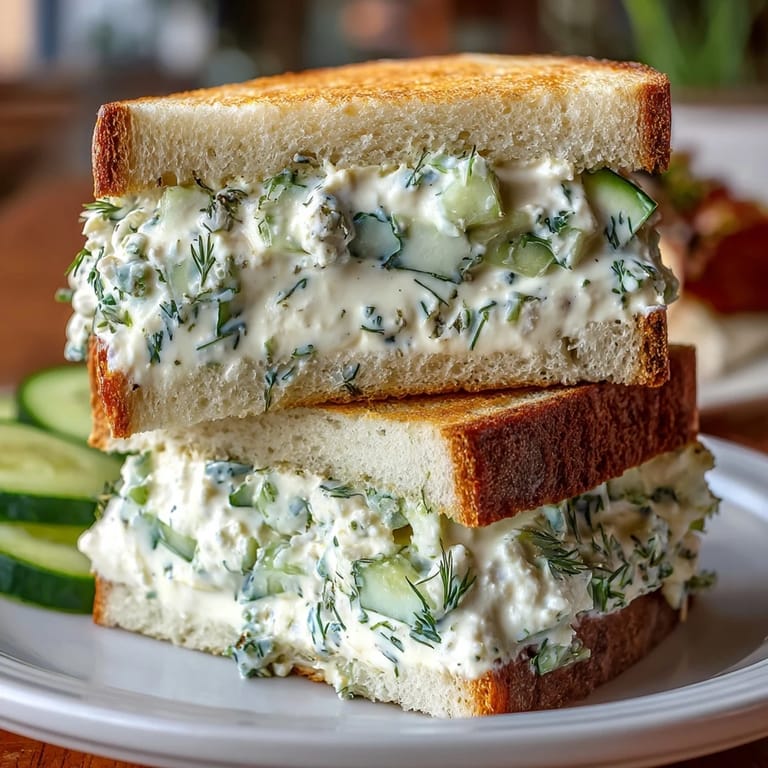
While the traditional version is perfect as-is, I've experimented with different breads and garnishes depending on the occasion and what's available. Whole wheat bread gives an earthier flavor, while pumpernickel creates a striking visual contrast with the green filling. Some people swear by adding a tiny pinch of lemon zest to brighten the flavor, and fresh cucumber slices or dill fronds on top add visual elegance without changing the taste. The beauty of this recipe is its flexibility—once you understand the basic technique, you can make it your own.
- Try adding a whisper of fresh tarragon or parsley if you want to shift the herbaceous profile slightly.
- Thin cucumber slices layered on top before cutting add moisture and visual appeal without much extra effort.
- Keep everything cold until the moment of serving for the crispest, most refreshing bite.
 Pin it
 These little sandwiches have become my secret weapon for any gathering where I want to impress without spending hours in the kitchen. They're proof that elegance doesn't require complexity, just care and a few good ingredients.
Recipe FAQs
- → What type of bread works best for these sandwiches?
White sandwich bread with the crust removed is traditional, but whole wheat or rye can be used for added flavor variation.
- → How can I prevent the sandwiches from becoming soggy?
Lightly buttering one side of each bread slice before spreading the filling helps keep the bread from absorbing moisture.
- → Can the spread be prepared in advance?
Yes, the Benedictine mixture can be made a day ahead and refrigerated to enhance the flavors and ease assembly.
- → What herbs are included in the filling?
Fresh dill and chives are finely chopped and mixed into the cream cheese spread, adding a fragrant and fresh taste.
- → Is green food coloring necessary?
Green food coloring is optional and used only to achieve the traditional Benedictine green hue; it does not affect the flavor.
- → Are there any allergen considerations?
These sandwiches contain dairy, wheat, and eggs, so checking for individual allergies is advised.