 Pin it
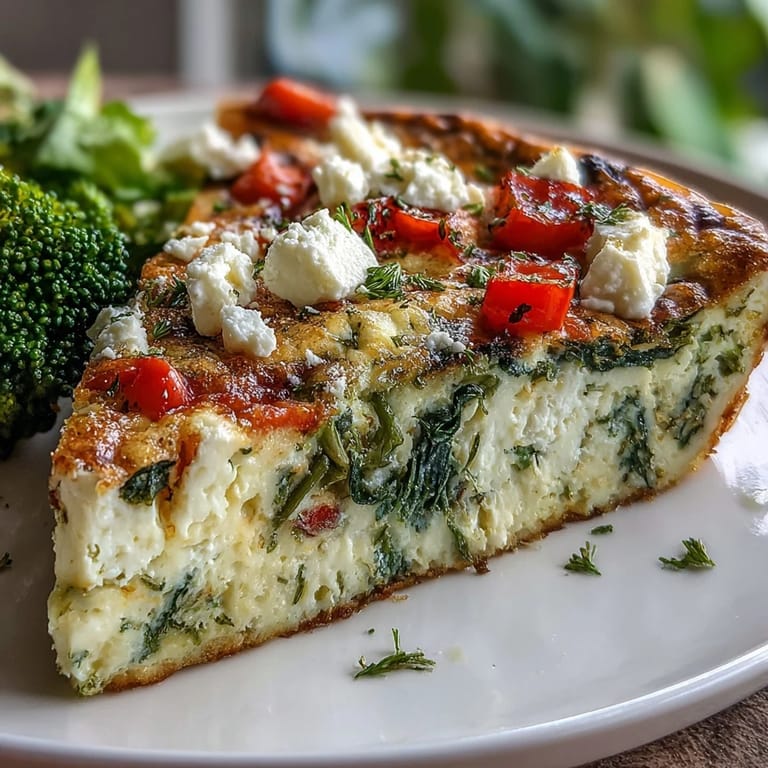
 There's something quietly satisfying about cracking open a carton of egg whites and knowing you're building something nourishing without any guilt attached. I discovered this frittata on a Saturday morning when I was tired of the same scrambled eggs routine and wanted something that could feed a small crowd while keeping my goals in check. The vegetables practically sing in this dish—bright, crisp, and somehow more flavorful when cooked together than they ever are alone. What started as an experiment in my kitchen has become the thing people ask me to bring to brunches.
I made this for my friend Maya during a Sunday visit, and she devoured two large slices before asking if it was actually diet food or if I was tricking her. Watching her face light up when she realized it was both delicious and aligned with her own wellness goals felt like the ultimate kitchen victory. That moment reminded me why I love cooking for people—it's not about restriction, it's about abundance in a different form.
Ingredients
- Baby spinach, chopped: Wilts down to almost nothing but adds iron and a subtle earthiness that grounds all the brighter vegetables.
- Broccoli florets, finely chopped: Cut them small so they don't dominate bites, and they'll soften just enough without turning mushy.
- Red bell pepper, diced: The sweetness here balances the savory herbs beautifully and gives the frittata gorgeous color.
- Zucchini, diced: Adds moisture and substance, but dice it fine so it cooks through in the oven without releasing too much water.
- Red onion, finely diced: A smaller amount than you might use in other dishes keeps the bite sharp and not overpowering.
- Cherry tomatoes, halved: Save these for the top where they can caramelize slightly and burst with flavor when you eat them.
- Liquid egg whites: Two cups gives you the protein backbone without any yolk richness—it's the secret to keeping this light and fluffy.
- Low-fat feta cheese, crumbled: Optional, but those salty little pockets make every bite feel more intentional and special.
- Fresh parsley and dried oregano: Parsley stays bright and fresh while oregano deepens the flavor profile without needing butter or oil to carry it.
- Garlic powder, black pepper, and salt: Basic but essential—season as you taste, especially if your vegetables released liquid.
- Nonstick cooking spray or olive oil: Just enough to prevent sticking, not enough to add unnecessary calories.
Tired of Takeout? 🥡
Get 10 meals you can make faster than delivery arrives. Seriously.
One email. No spam. Unsubscribe anytime.
Instructions
- Heat your oven and prepare the pan:
- Set the oven to 375°F and lightly coat your 9-inch oven-safe skillet with cooking spray or that teaspoon of oil. You want just enough coating so nothing sticks, not a slick of grease.
- Sauté the hardier vegetables first:
- Over medium heat, add the onion, bell pepper, and broccoli to the skillet and let them soften for 3–4 minutes, stirring occasionally. You're looking for them to lose their raw edge but still have some texture.
- Wilt in the spinach and zucchini:
- Add the zucchini and spinach and cook for another 2–3 minutes until the spinach collapses and everything is warm and slightly softened. The skillet will smell incredible at this point.
- Whisk the egg white base:
- In a large bowl, combine the liquid egg whites with garlic powder, oregano, pepper, salt, and parsley, whisking until everything is evenly distributed. Taste it here and adjust seasoning—egg whites are forgiving.
- Combine and transfer:
- Stir the warm vegetables into the egg white mixture, making sure the vegetables are evenly distributed, then pour everything back into the skillet. It will look like an enormous omelet batter at this stage.
- Top and bake:
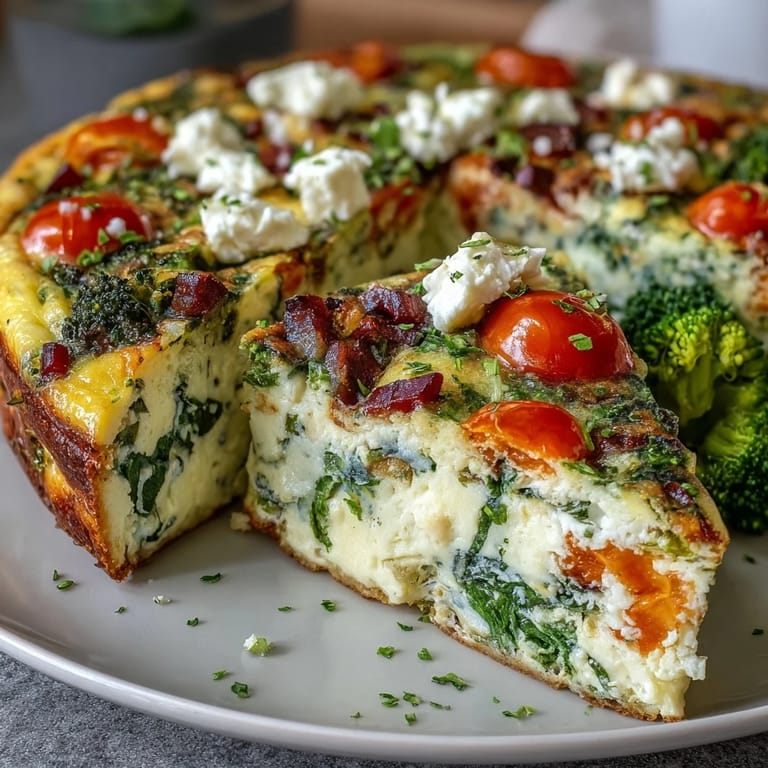
- Scatter the cherry tomato halves and feta cheese over the top, then slide the skillet into the oven. Bake for 20–25 minutes until the center is set but still slightly tender, and the top has turned a gentle golden color.
- Rest and serve:
- Let it cool for 5 minutes so the structure sets properly, then slice into four pieces and serve warm. You can eat it straight from the skillet if you're feeling casual about it.
 Pin it
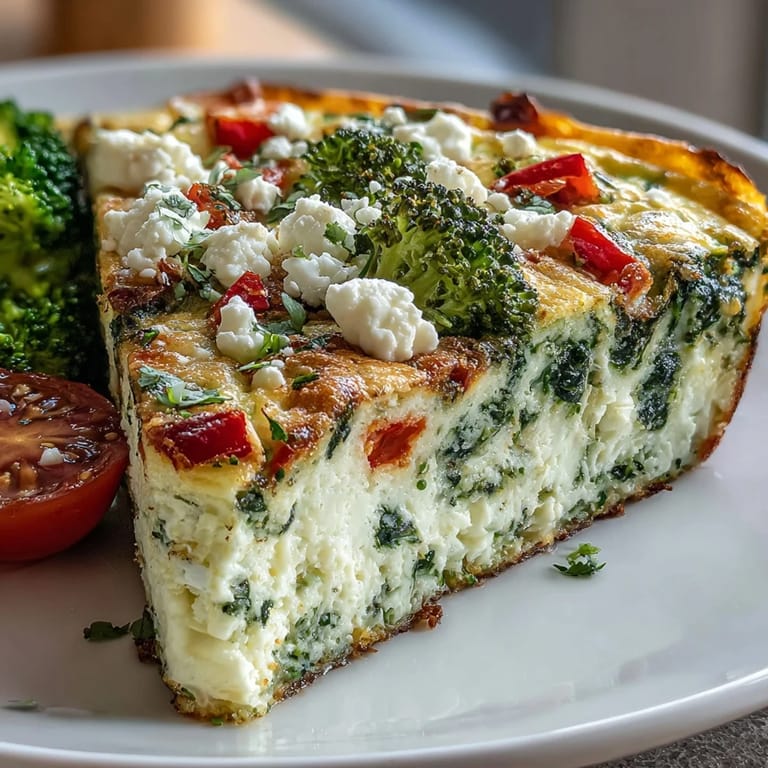
 This frittata became a regular part of my week when I realized I could make it on Sunday, slice it into portions, and reheat a slice or two on busy mornings. It transformed from a special occasion brunch dish into my reliable friend when I needed something that felt like real food, not a compromise.
Variations That Keep It Interesting
The beauty of this frittata is how endlessly adaptable it is to whatever's in your vegetable drawer or what you're craving that week. Mushrooms work wonderfully if you slice them thin and sauté them with the onion. Asparagus gets tender in the oven and adds a slight grassy note that feels sophisticated without being fussy. Kale is heartier than spinach and holds up better if you want something with more presence and texture. I've even used roasted red peppers from a jar when fresh vegetables felt like too much effort, and honestly, they delivered the same satisfaction. The key is keeping your vegetable-to-egg ratio roughly the same so the structure stays intact.
Flavor Boosting Secrets
Once you've made this basic version a few times, you'll start noticing how small additions can shift the entire personality of the dish. A pinch of smoked paprika adds a subtle depth that makes people ask what your secret ingredient is. Red pepper flakes scattered on top before baking give you tiny bursts of heat that surprise your palate. I've had success with a tiny sprinkle of everything bagel seasoning, which sounds weird but somehow works perfectly. The trick is introducing these flavors gradually so you can taste how they integrate rather than overwhelming the delicate egg white base.
Serving and Storage Wisdom
Fresh from the oven, this frittata is fluffy and tender, but it's equally delicious at room temperature or gently reheated. Leftover slices keep well in the refrigerator for about three days, and reheating them briefly in a 300°F oven keeps them from getting rubbery. I serve mine with a simple side salad dressed with lemon and olive oil, or beside a slice of whole grain toast for anyone who wants more carbs. It travels well if you're bringing it somewhere, and it doesn't require fancy plating to look intentional and restaurant-quality.
- Pair it with fresh berries and Greek yogurt for a complete protein-forward brunch.
- Make it ahead and slice it cold for grab-and-go breakfasts throughout the week.
- Bring a portion to potlucks and watch people ask if it's actually as light as it tastes.
 Pin it
 This frittata taught me that eating intentionally doesn't mean eating boring food or small portions. It's become proof that nourishment and genuine enjoyment can absolutely live in the same dish.
Recipe FAQs
- → Can I use whole eggs instead of egg whites?
Yes, whole eggs can be used, but the dish will have a richer texture and higher calorie content.
- → What vegetables work best in this dish?
Leafy greens like spinach, and crunchy veggies such as broccoli, bell peppers, zucchini, and cherry tomatoes complement the flavors well.
- → How can I make this dairy-free?
Simply omit the feta cheese or substitute it with a non-dairy cheese alternative.
- → What is the best way to cook the vegetables before baking?
Sauté the onions, bell peppers, and broccoli until softened, then add zucchini and spinach until wilted to enhance their flavors.
- → Can I prepare this dish ahead of time?
Yes, you can assemble it in advance and refrigerate. Bake right before serving for the best texture.
- → What sides pair well with this dish?
A fresh side salad or whole grain toast enhances the meal for a complete brunch experience.