 Pin it
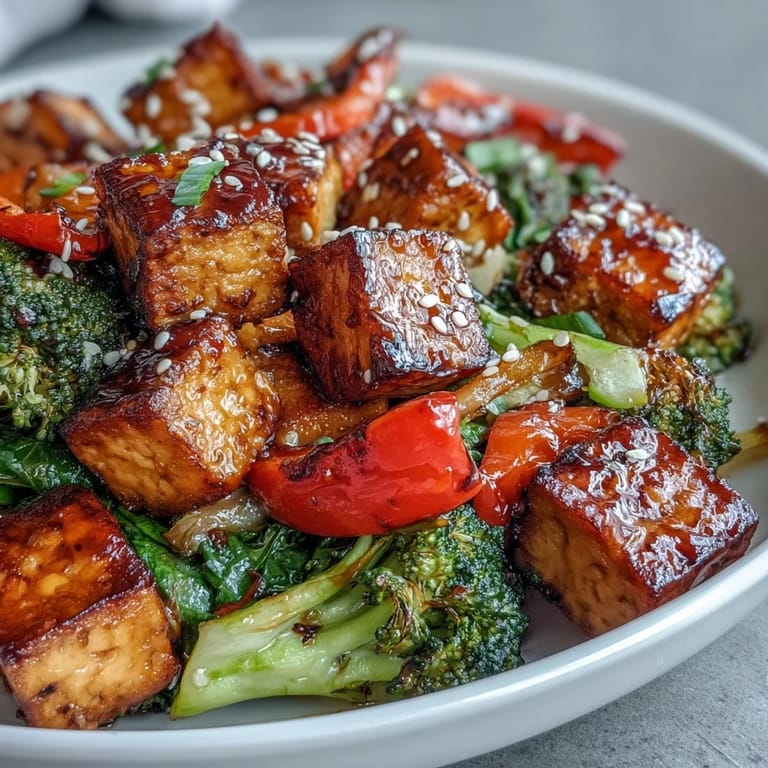
 My roommate knocked on my kitchen door one Tuesday evening asking what smelled so good, and honestly, I was surprised myself—sheet pan dinners rarely feel like they're worth the compliment. But this teriyaki tofu had somehow filled the whole apartment with this warm, gingery umami that made even the skeptics curious. I'd been experimenting with ways to cook tofu that actually made it taste intentional rather than like something I was forcing onto a plate, and this method changed everything for me. The oven does most of the work while you're barely paying attention, and the vegetables somehow end up caramelized instead of steamed into oblivion.
I made this for a dinner party where I was feeding a mix of my vegan friends and some very committed omnivores, and the moment everyone tasted it without asking what was in it—just quietly going back for seconds—I knew I'd found something special. Nobody made a big deal about it being plant-based, which is exactly the vibe I was going for. It became the dish I'd text people to ask if they were coming over, because I knew they'd actually want to eat it.
Ingredients
- Extra-firm tofu (400 g / 14 oz), pressed and cubed: Pressing your tofu matters more than you'd think—it removes water that would otherwise make everything steamy instead of crispy, and it gives the sauce something to cling to rather than just slide off.
- Broccoli florets (1 head, about 300 g): Cut them into fairly uniform pieces so they roast evenly and get those crispy edges that make people forget they're eating vegetables.
- Red and yellow bell peppers, sliced: The color combination isn't just pretty; different peppers add subtle flavor variations that make the dish feel less one-note.
- Medium red onion, sliced: Red onions stay intact and slightly crisp during roasting, unlike their yellow cousins which turn soft and jammy.
- Vegetable oil (2 tbsp): Avocado or canola oil both work beautifully—the goal is enough oil to help everything brown, not so much that it becomes heavy.
- Salt and black pepper: Season before the oven so flavors develop during roasting rather than tasting added on top.
- Low-sodium soy sauce or tamari (60 ml / 1/4 cup): Low-sodium lets you control the saltiness since the sauce will reduce and concentrate, and tamari works if you're avoiding gluten.
- Maple syrup (2 tbsp): It dissolves smoothly into the sauce and brings a subtle sweetness that feels more sophisticated than regular sugar.
- Rice vinegar (1 tbsp): This small amount adds brightness that stops the sauce from tasting one-dimensional.
- Sesame oil (1 tbsp): Just enough to give you that signature teriyaki depth without overpowering everything else.
- Garlic and ginger (2 cloves minced, 1 tbsp grated): Fresh versions truly matter here—they're the backbone that makes your homemade sauce taste like you actually know what you're doing.
- Cornstarch (1 tbsp): This thickens the sauce so it coats the vegetables and tofu instead of pooling at the bottom of the pan.
- Water (60 ml / 1/4 cup): The liquid base that lets all your flavors meld together smoothly.
- Sesame seeds and sliced green onions (optional): These aren't really optional if you want the dish to taste finished—they add texture and a fresh note at the end.
Tired of Takeout? 🥡
Get 10 meals you can make faster than delivery arrives. Seriously.
One email. No spam. Unsubscribe anytime.
Instructions
- Get your oven ready and prepare your stage:
- Set your oven to 220°C (425°F) and line a large sheet pan with parchment paper—this prevents sticking and makes cleanup genuinely easy. Everything is about to get organized on this one pan, so make sure it's large enough that vegetables aren't crowded on top of each other.
- Arrange and season your vegetables and tofu:
- Scatter your cubed tofu, broccoli florets, sliced peppers, and red onion across the sheet pan in a fairly even layer. Drizzle everything with vegetable oil, sprinkle generously with salt and pepper, then toss the whole thing together with your hands or a wooden spoon until everything has a light coating of oil and seasoning.
- Let the oven work its magic on the vegetables:
- Bake for 20 minutes, and about halfway through (around the 10-minute mark), give everything a gentle toss so the tofu and vegetables brown evenly on all sides. You're looking for the broccoli florets to have crispy, slightly charred edges and the tofu to turn golden—this is when the real flavor happens.
- Build your teriyaki sauce while things roast:
- In a small saucepan, whisk together your soy sauce, maple syrup, rice vinegar, sesame oil, minced garlic, grated ginger, cornstarch, and water. Place it over medium heat and whisk continuously—you'll feel it start to thicken after about 2 to 3 minutes, which is when you know it's ready. Remove from heat immediately so you don't overcook it.
- Marry the sauce with your roasted ingredients:
- Pour the warm teriyaki sauce over your tofu and vegetables on the pan and toss everything gently until coated. Return the pan to the oven for just 5 more minutes—this second bake lets the sauce set and caramelize slightly against the tofu and vegetables.
- Finish and serve with intention:
- Remove from the oven, scatter sesame seeds and sliced green onions across the top, and serve immediately over steamed jasmine or brown rice if you'd like. The contrast of the warm, saucy tofu against fluffy rice is where this dish really sings.
 Pin it
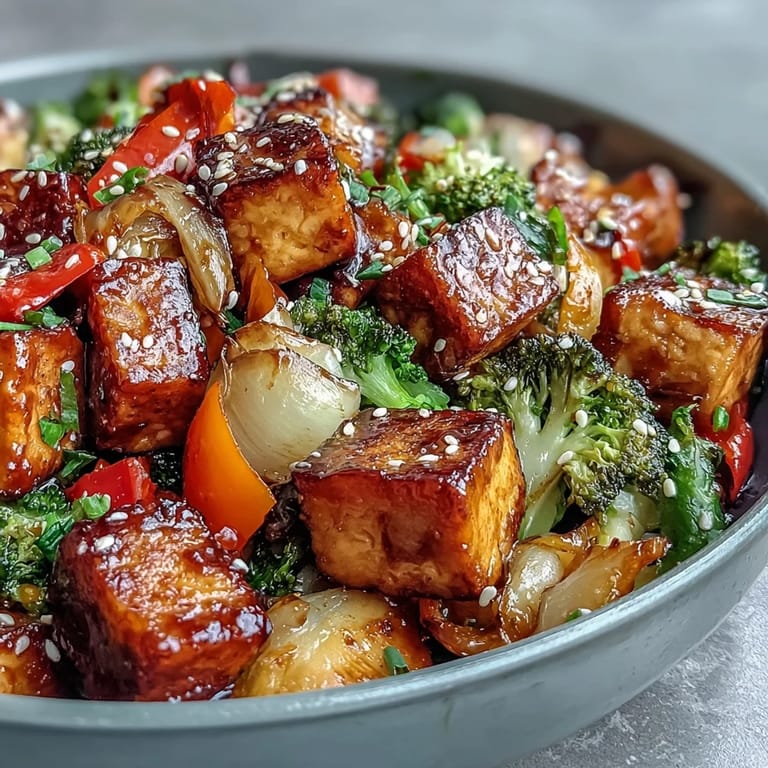
 There's something quietly satisfying about watching a sheet pan dinner pull together—everything happens in stages without requiring your constant attention, and somehow it feels like you did more work than you actually did. My friends started asking me to teach them how to make this, which surprised me because I'd never thought of myself as someone with a signature dish.
Why This Method Works Better Than Traditional Stir-Frying
Sheet pan cooking lets heat surround your food instead of fighting with a crowded skillet, which means your tofu and vegetables caramelize rather than steam themselves into softness. You're not standing over a hot stove managing heat levels and timing, which changes the entire feeling of cooking dinner. The sauce gets a chance to set and develop flavor rather than immediately evaporating from a screaming hot pan, and honestly, the results feel more intentional every single time.
Making This Recipe Your Own
The vegetable combination is genuinely flexible—I've swapped in snap peas, carrots, mushrooms, and zucchini depending on what's in my fridge or what feels seasonal. The sauce is the real backbone here, so as long as you keep those proportions consistent, you're safe to experiment with vegetables until you find your favorite combination. I once added cashews to mine on a whim and it changed everything, so don't be afraid to treat this recipe like a foundation rather than a rule.
Storage and Reheating Tips
This dish keeps beautifully in the refrigerator for up to three days, though I'll admit the tofu loses some crispness—it's still delicious, just softer. I've found that reheating it gently in a 180°C (350°F) oven for about 10 minutes restores some of the texture without drying anything out, or you can simply reheat it in a skillet over medium heat if you're in a hurry.
- For extra-crispy tofu, toss your cubes in 1 tablespoon of cornstarch before the initial roasting—this creates a subtle crust that holds up beautifully.
- For gluten-free cooking, swap the soy sauce for tamari and double-check that your other ingredients are certified gluten-free.
- Leftover sauce keeps in the fridge for about a week and works beautifully on rice, roasted vegetables, or honestly even scrambled eggs.
 Pin it
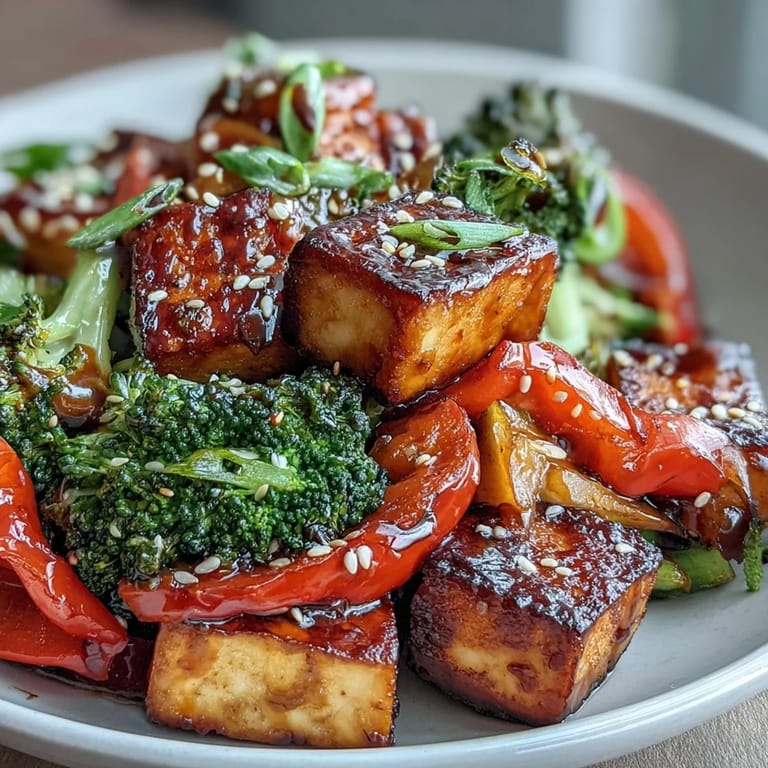
 This recipe became my answer to the question 'what should we make for dinner?' because it's genuinely hard to mess up and somehow always feels special. It's proof that plant-based cooking doesn't require complicated techniques or a pantry full of mysterious ingredients—just intention and decent ingredients cooked together thoughtfully.