 Pin it
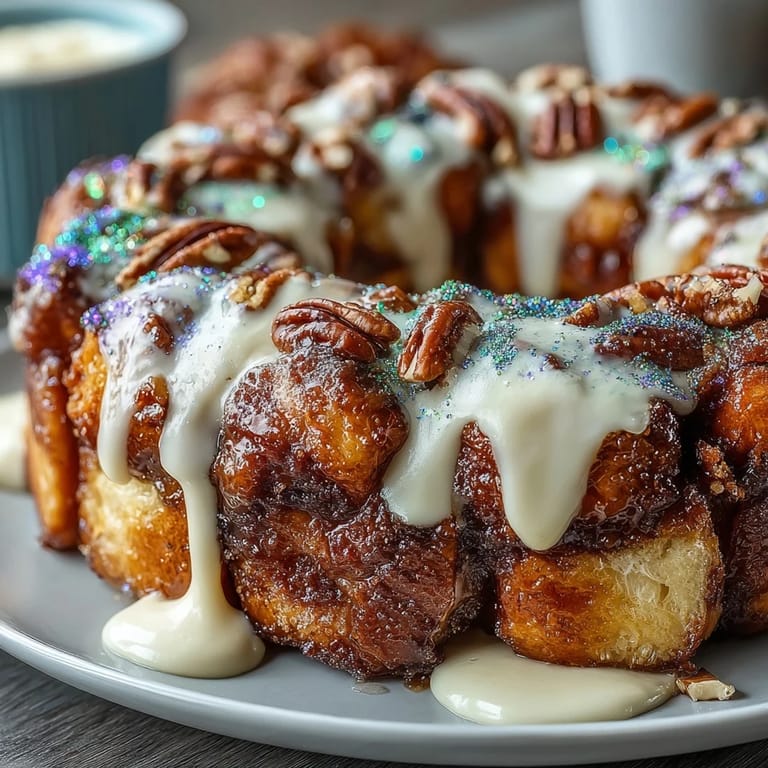
 There's something about the weeks leading up to Mardi Gras that makes me want to bake something loud and celebratory, and this King Cake monkey bread landed in my kitchen on one of those restless mornings when I couldn't decide between breakfast and dessert. I'd been scrolling through old photos of New Orleans street celebrations when the idea struck—why not combine the purple, green, and gold festiveness of the season with the pure joy of pulling apart warm, buttery bread? The first time I made it, my kitchen filled with cinnamon-sugar dust, and by the time the icing hit the warm bread, my whole apartment smelled like a bakery having a party.
I baked this for a small gathering last winter, and watching people's faces light up when they saw the purple, green, and gold sprinkles cascading down the sides made me realize this recipe was about more than just feeding people—it was about creating a moment. One friend actually gasped, which felt like winning the lottery as a home baker.
Ingredients
- 2 cans refrigerated biscuit dough (16 oz each): These are your foundation, and honestly, there's no shame in using them—they're reliable, quick, and designed to create fluffy layers without any kneading.
- 1/2 cup unsalted butter, melted: Keep this warm so the dough balls coat evenly and soak up all that rich, buttery flavor as they bake.
- 3/4 cup granulated sugar and 2 tsp ground cinnamon: This mixture becomes magic when you dust those dough balls; don't skip the step of mixing it together first so the spices distribute evenly.
- 1/2 cup packed brown sugar: This caramelizes slightly between the layers, creating pockets of deep, molasses-forward sweetness that granulated sugar just can't replicate.
- 1/2 cup chopped pecans (optional but encouraged): They add a textural surprise and subtle earthiness that keeps your palate from getting overwhelmed by all the sweetness.
- 4 oz softened cream cheese, 1 cup powdered sugar, 2 tbsp milk, and 1/2 tsp vanilla extract: The icing needs to be smooth enough to drizzle but thick enough to cling to the warm bread—this balance is everything.
- Purple, green, and gold sanding sugars: Use the coarser sanding variety rather than fine sprinkles; it catches the light and actually tastes like it has substance.
Tired of Takeout? 🥡
Get 10 meals you can make faster than delivery arrives. Seriously.
One email. No spam. Unsubscribe anytime.
Instructions
- Prepare your stage:
- Preheat that oven to 350°F and give your Bundt pan a thorough coating of nonstick spray or butter—you'll want every crevice covered so this beauty releases cleanly. Have all your ingredients measured and bowls ready before you start working with that dough, because once you begin, momentum is everything.
- Make your cinnamon-sugar coating:
- Whisk together the granulated sugar and ground cinnamon in a shallow bowl, breaking up any clumps so it becomes a fine, even mixture. This is the magic dust that's about to transform those plain biscuits into something irresistible.
- Transform the biscuits into balls:
- Open those cans of dough and cut each biscuit into four rough pieces—don't stress about perfect squares. Roll each piece between your palms into a ball, working quickly so the dough stays pliable and doesn't get overworked.
- The coating ritual:
- Dip each dough ball into the melted butter, letting any excess drip off, then immediately roll it in the cinnamon-sugar mixture until it's fully coated. Your hands will get sticky, and that's perfectly fine—this is when baking stops being clean and starts being fun.
- Build the layers:
- Pour half your cinnamon-sugar coated dough balls into the Bundt pan, spreading them out so they nestle together without huge gaps. Scatter half the brown sugar and half the pecans over this first layer, then repeat with the remaining dough balls, brown sugar, and pecans.
- The finishing touch before baking:
- Drizzle any leftover melted butter over the top layer, letting it seep down between the balls so every nook gets that buttery richness. This is the insurance policy that keeps everything moist and connected.
- Bake with intention:
- Slide that pan into the oven and bake for 32 to 38 minutes, watching until the top turns golden brown and you can smell the caramel forming at the bottom. The timing varies slightly depending on your oven's personality, so trust your senses more than the clock.
- The crucial inversion:
- Let it cool in the pan for exactly 10 minutes—this allows the structure to set just enough while still being warm enough to release cleanly. Place your serving plate over the top and flip with confidence; if it sticks, run a thin knife around the edges and try again.
- Create the icing:
- Beat the softened cream cheese until it's completely smooth with no lumps, then gradually add the powdered sugar, milk, and vanilla, beating until you reach a pourable consistency. If it's too thick, add milk a teaspoon at a time; if it's too thin, add more powdered sugar in small amounts.
- The grand finale:
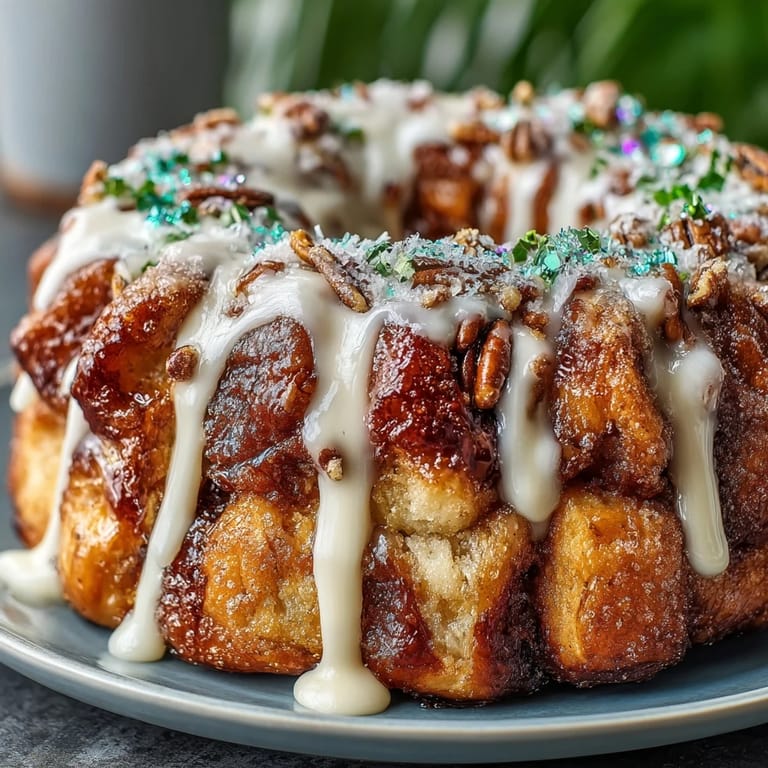
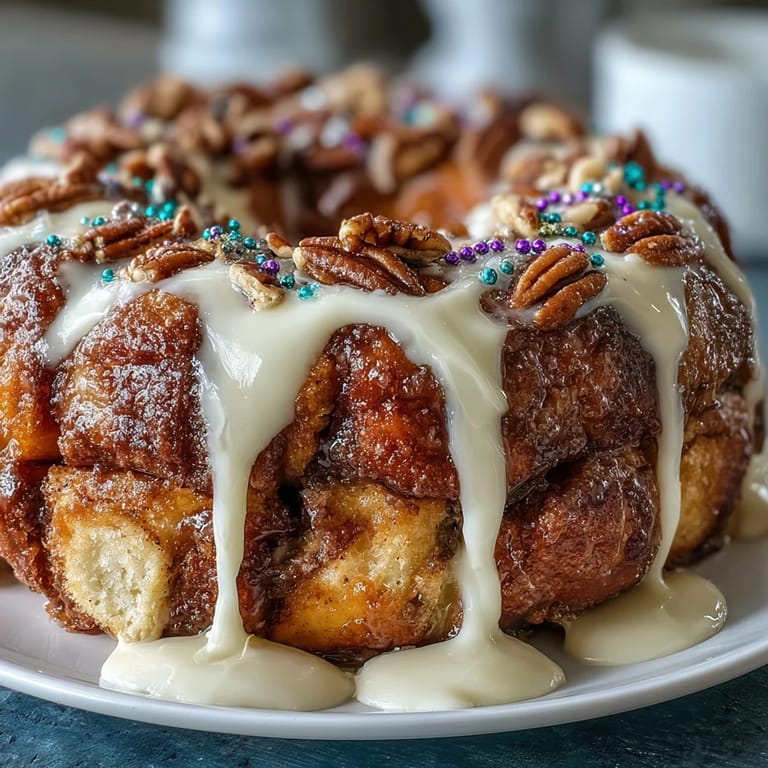
- Drizzle that icing over the still-warm monkey bread so it melts slightly and clings to all the nooks and crannies. While the icing is still wet, sprinkle the purple, green, and gold sugars in distinct sections around the bread—this is where it becomes a true King Cake celebration.
- Serve and share:
- Let everyone pull apart their own pieces warm, watching as the layers separate and reveal all those caramelized brown sugar pockets. Serve it while it's still warm, because that's when the magic truly happens.
 Pin it
 Last year, I made this for my neighbors during a spontaneous block party, and it became the thing people actually remembered—not because it was technically perfect, but because it represented something: celebration, effort, and the willingness to make something bold and colorful in the middle of winter. Sometimes a dessert is just a dessert, and sometimes it's a tiny edible festival.
Why This Becomes a Tradition
This bread has a way of becoming the recipe people request specifically when they know you're baking—it's festive without requiring actual trip to New Orleans, impressive without being fussy, and shareable in the best way. Once you've made it once, the second time you make it, you'll understand its power, and you'll probably start planning when you can make it again.
Flavor Layers That Build Something Special
What makes this different from regular monkey bread is the intentional layering of textures and sweetness—the granulated cinnamon-sugar creates a crispy shell, the brown sugar melts into caramel pockets, the pecans add earthiness, and the cream cheese icing brings just enough tang to keep everything from becoming cloying. Each component has a reason for being there, and they work together like a well-rehearsed dance.
Make It Entirely Your Own
The beauty of this recipe is that it welcomes personalization—swap the pecans for walnuts, add a pinch of nutmeg to your cinnamon-sugar mixture, or experiment with different colored sugars depending on what you're celebrating. I've made versions with crushed candy canes for Christmas, with just purple and gold for casual celebrations, and even with pearl sugar for texture variation.
- Hide that plastic baby right after you invert the bread from the pan, tucking it into a warm nook where it'll surprise someone during the pulling-apart moment.
- If you're making this ahead, you can assemble everything the night before and bake it fresh in the morning—just add a few extra minutes to the baking time since it'll be cold.
- Leftover pieces (if there are any) are actually decent the next day at room temperature, but honestly, warm monkey bread is such a different experience that you'll want to eat it fresh.
 Pin it
 This recipe is your ticket to looking like you threw an effortless celebration, when really you just showed up with intention and a can-do attitude. Make it, watch people's eyes light up, and know you've created something that matters.
Recipe FAQs
- → What type of dough is best for this pull-apart?
Refrigerated biscuit dough works well for layering and achieving soft, fluffy balls that bake evenly in the pull-apart.
- → Can pecans be substituted or omitted?
Yes, pecans can be omitted for allergies or replaced with walnuts or other nuts to suit preference.
- → How do the colored sugars contribute to the dish?
Purple, green, and gold sanding sugars add a festive appearance reminiscent of King Cake traditions, enhancing visual appeal and slight added crunch.
- → What is the best way to serve the finished pull-apart?
Serve warm by pulling apart individual pieces to enjoy the soft texture and creamy icing in every bite.
- → How should leftovers be stored?
Cover the pull-apart tightly and keep at room temperature for up to 2 days to maintain softness and flavor.