 Pin it
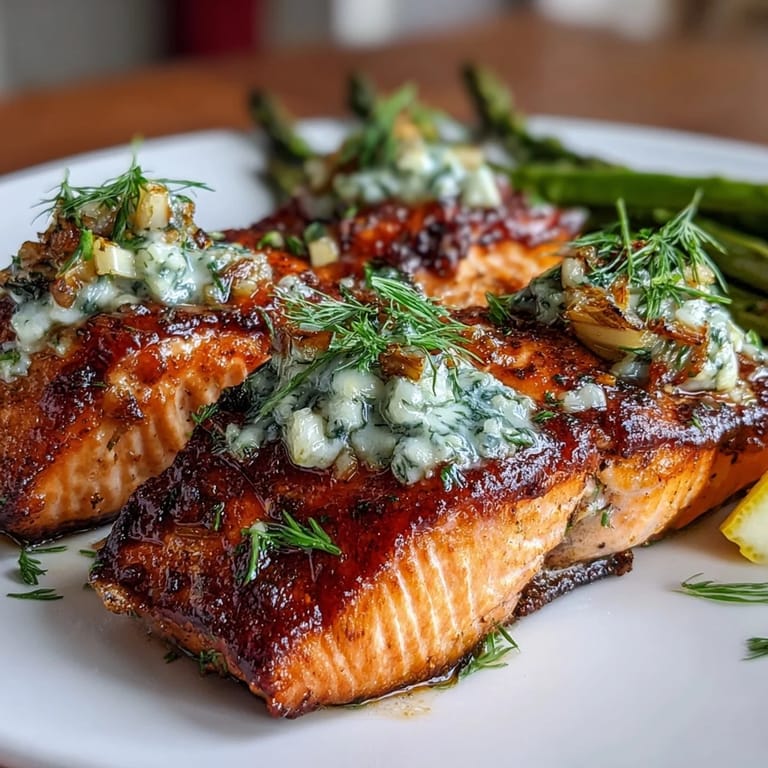
 There's something about spring that makes me crave salmon, and this garlic butter version came about almost by accident on a Tuesday evening when I had friends dropping by and very little time to think. I pulled out what I had—salmon fillets, asparagus that was getting its moment, butter, garlic—and something clicked. Twenty minutes later, the kitchen smelled incredible, and my guests were already reaching for seconds before we'd even sat down.
I made this for my partner's parents during their first visit to our new place, and I remember standing at the oven watching the salmon skin crisp up while the asparagus turned this perfect shade of golden green. When I pulled it out and drizzled those extra lemon wedges over everything, my mother-in-law actually put her hand on her chest and said it looked too beautiful to eat. We all knew better, of course.
Ingredients
- Salmon fillets (4, about 6 oz each): The skin acts like a natural shield, keeping the flesh tender while the underside gets gently steamed. Pick fillets that are roughly the same thickness so they cook evenly, and don't panic if some are thicker—just nestle them at the edge of the pan where heat is gentler.
- Fresh asparagus (1 lb), woody ends trimmed: Snap off the bottom third by hand, bending until each spear breaks naturally at its tender point. This simple trick saves you from accidentally removing too much and wastes nothing.
- Unsalted butter (4 tbsp), melted: Butter is the foundation here, so use something good if you can. The lower salt content lets the garlic and lemon shine without fighting for space.
- Garlic (3 cloves), minced: Fresh is non-negotiable because you'll taste every bit of it. Mince it fine so it distributes evenly and doesn't create hot spots of raw garlic flavor.
- Fresh lemon juice (1 tbsp) and lemon slices: The slices become little flavor packets tucked throughout the pan, while the juice in the sauce keeps everything bright and prevents the richness from sitting too heavy.
- Dijon mustard (1 tsp): This is my secret—not for mustard flavor, but because it acts like an emulsifier and adds a subtle backbone that makes you wonder what that mysterious depth is.
- Salt, black pepper, and red pepper flakes: Season to taste and layer your heat gently. The red flakes add a whisper of warmth rather than a shout, so start small and adjust if you like more punch.
Tired of Takeout? 🥡
Get 10 meals you can make faster than delivery arrives. Seriously.
One email. No spam. Unsubscribe anytime.
Instructions
- Set your stage:
- Preheat the oven to 400°F and line your baking sheet with parchment paper or foil. This temperature is the sweet spot where salmon doesn't dry out but cooks through reliably.
- Arrange everything with intention:
- Place salmon fillets in the center of your sheet with some breathing room between them, then scatter asparagus spears around and between. Tuck lemon slices wherever they fit because they'll flavor everything nearby and look beautiful doing it.
- Make the golden sauce:
- Whisk melted butter with minced garlic, lemon juice, Dijon mustard, salt, pepper, and red pepper flakes in a small bowl. The whisking helps it come together smoothly and keeps the garlic distributed rather than clumping.
- Anoint with care:
- Drizzle the sauce generously over salmon and asparagus, letting it pool slightly in the pan. Don't hold back here—the parchment paper will catch everything and the sauce is where the flavor lives.
- Roast until golden:
- Slide the pan into the oven for 15 to 18 minutes, depending on the thickness of your fillets. The salmon is ready when it flakes with gentle pressure from a fork and has turned from translucent to opaque, while asparagus should be tender but not limp.
- Finish and serve:
- Scatter fresh parsley over everything if you have it, and serve immediately with extra lemon wedges. The moment it comes out of the oven is when it's most beautiful and most delicious.
 Pin it
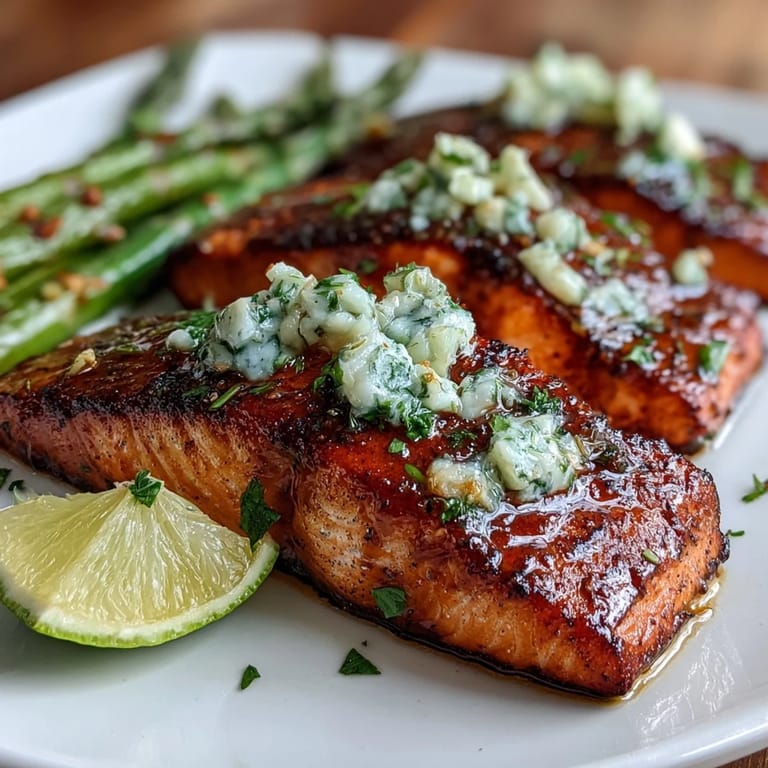
 There was an evening last month when my roommate came home exhausted from work, and I surprised her with this waiting in the kitchen. She walked in mid-roast, caught the smell of garlic and butter and lemon, and just stopped in her tracks. That moment—when someone stops everything because a meal smells that good—that's what this dish does.
Cooking for Weeknights and Special Dinners
This is the recipe I reach for when I want something that tastes like effort but doesn't demand it. It works equally well on a random Wednesday when you're too tired to think complicated thoughts, or when you're setting the table with actual napkins and hoping to impress someone. The formula stays the same, but the feeling changes everything.
Building the Sauce Around What You Have
The beauty of the garlic butter sauce is that it's forgiving. Out of Dijon mustard? Skip it and add a tiny pinch of honey instead. No fresh parsley? The dish stands on its own. I've made this with white wine whisked into the butter for extra sophistication, and with a touch of honey when someone at the table had a sweet tooth. The core is butter, garlic, and lemon—everything else is just variations on a theme.
What to Serve Alongside and Small Moments of Adjusting
This dish shines with minimal accompaniment—a good crusty bread to soak up sauce, maybe a simple green salad if you're feeling virtuous. I've served it with roasted fingerling potatoes when I wanted something hearty, and with just a glass of cold white wine when simplicity felt right. The key is not overthinking it because the salmon and asparagus in their garlic butter already have the stage.
- Pair with Sauvignon Blanc or Pinot Grigio to echo the bright lemon notes in the sauce.
- If you substitute green beans or broccolini for asparagus, trim them the same way and they'll cook in the same timeframe.
- A light grating of Parmesan over the asparagus before roasting adds savory depth, but respect the fish's delicate nature and don't overpower it.
 Pin it
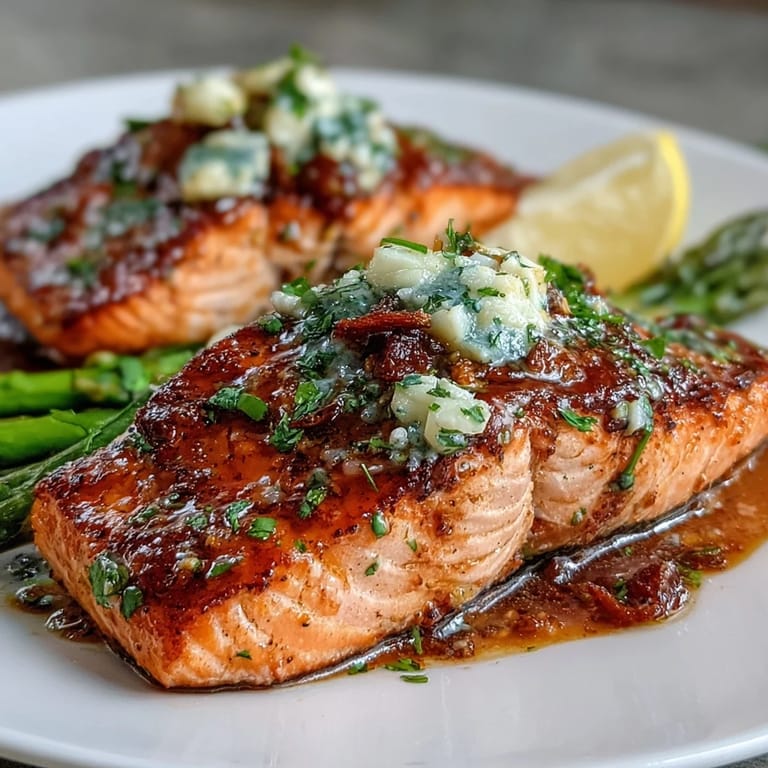
 This is the kind of meal that reminds you why cooking matters—not because you spent hours laboring over it, but because twenty minutes and a handful of good ingredients can transform an ordinary evening into something worth remembering. Come back to this one often.
Recipe FAQs
- → What is the best way to cook salmon fillets evenly?
Place salmon fillets skin-side down on a lined baking sheet and roast at 400°F (200°C) to ensure even cooking and a tender texture.
- → How can I tell when asparagus is perfectly cooked?
Asparagus should be tender but still crisp; roast it until just tender—usually 15-18 minutes—to avoid sogginess.
- → Can I substitute other vegetables for asparagus?
Yes, green beans or broccolini work well as alternatives and offer complementary flavors and textures.
- → How does the garlic butter sauce enhance the dish?
The garlic butter sauce adds a rich, aromatic flavor that highlights the natural taste of salmon and asparagus while providing a smooth, savory coating.
- → Is it necessary to remove the salmon skin before cooking?
Skin can be left on or removed based on preference; leaving it on helps retain moisture and adds crispness when roasted.