 Pin it
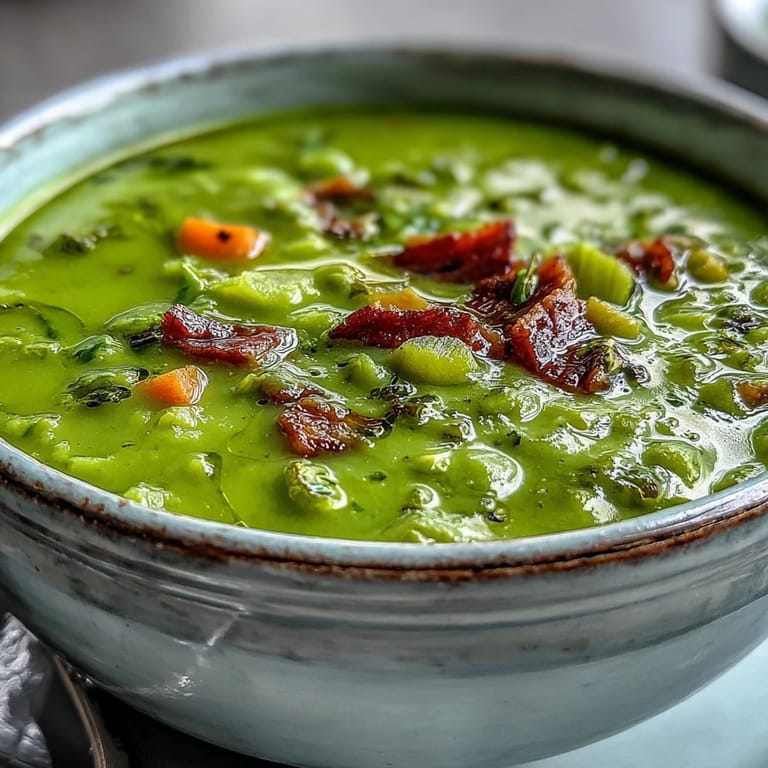
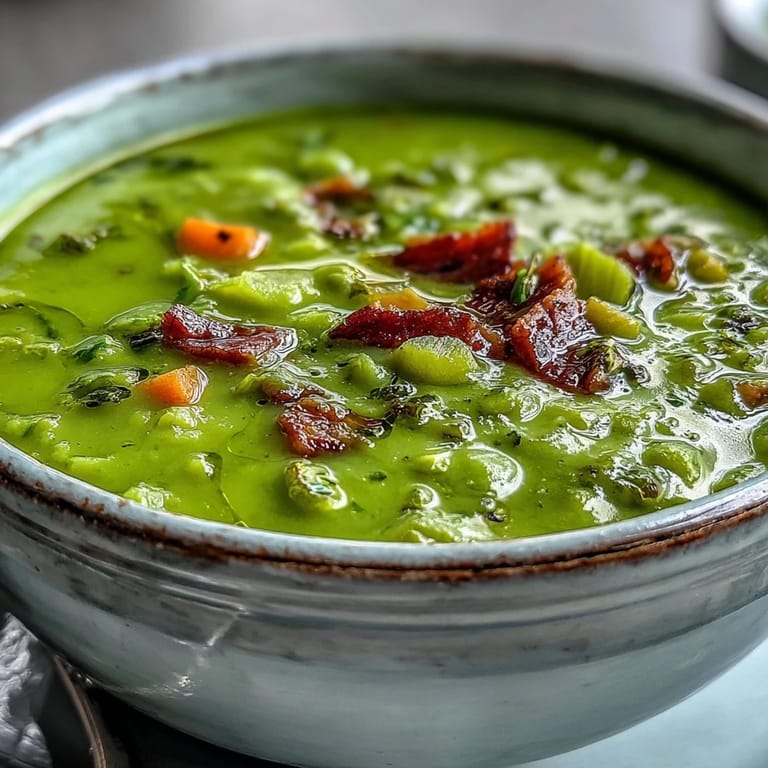
 There's something almost meditative about watching split peas soften into creamy submission, transforming from hard little pellets into something that tastes like a warm hug tastes if that were possible. My neighbor once described this soup as the kind of thing you make when you need the kitchen to smell like home, and I've never forgotten that. It's not fancy, it's not trendy, but it shows up exactly when you need it most—especially when the weather turns cold and everything else feels a little too complicated.
I made this for a friend who'd just moved into a new apartment with barely any furniture, and we ate it standing up in her kitchen, and somehow that moment—soup steam fogging her glasses, both of us laughing about how little she'd unpacked—became the thing that made that apartment feel like a real home. That's when I understood this recipe isn't really about the ingredients; it's about what it does to the people eating it.
Ingredients
- Dried split green peas: Rinse these thoroughly before cooking, and don't skip that step—it removes any dust and helps them cook more evenly, something I learned after my first batch had an odd grittiness I couldn't explain.
- Onion, carrots, and celery: This holy trinity builds the flavor foundation, and dicing them roughly the same size helps them soften together instead of some pieces disappearing while others stay too firm.
- Garlic cloves: Mince these fine so they distribute throughout the broth instead of leaving chunky surprises that some people (my dad) will definitely fish out and push to the bowl's edge.
- Potato: Choose a medium one and dice it smaller than you think you need to—it'll soak up the broth and add natural body to the soup without you having to do anything extra.
- Vegetable or chicken broth: This is where the soul lives, so use something you'd actually drink on its own, not the sad-tasting budget option that somehow costs almost the same.
- Bay leaf and dried thyme: These are essential for that savory depth, and yes, you must remember to fish out the bay leaf—finding one mid-bite is as unpleasant as it sounds.
- Olive oil: A tablespoon is all you need for sautéing the vegetables without making the soup feel heavy or greasy.
- Smoked ham or ham bone (optional): If using this, it transforms the whole thing into something more traditionally flavored, though the soup stands perfectly on its own without it.
- Salt and black pepper: Always season at the end when you can taste what you're actually working with, not at the beginning when you're basically guessing.
Tired of Takeout? 🥡
Get 10 meals you can make faster than delivery arrives. Seriously.
One email. No spam. Unsubscribe anytime.
Instructions
- Get your aromatics going:
- Heat the olive oil over medium heat and add your onion, carrots, and celery—you'll know they're ready when the kitchen smells sweet and the vegetables have softened enough that a fork passes through them easily, which takes about five minutes and genuinely marks the moment this stops being separate ingredients and starts becoming soup.
- Wake up the garlic:
- Stir in your minced garlic and let it cook for just one minute until it becomes fragrant, because going longer than that will make it bitter and angry, which is not the vibe we're going for here.
- Build the pot:
- Add your rinsed split peas, diced potato, bay leaf, thyme, broth, and ham if you're using it—stir everything together so nothing gets stuck to the bottom of the pot, which would be wasteful and slightly tragic.
- The long simmer:
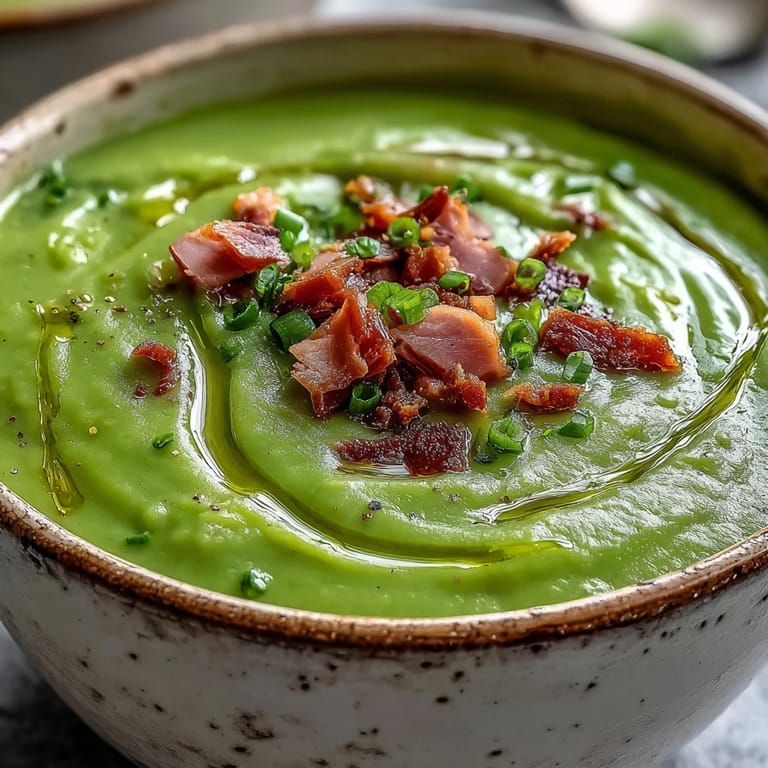
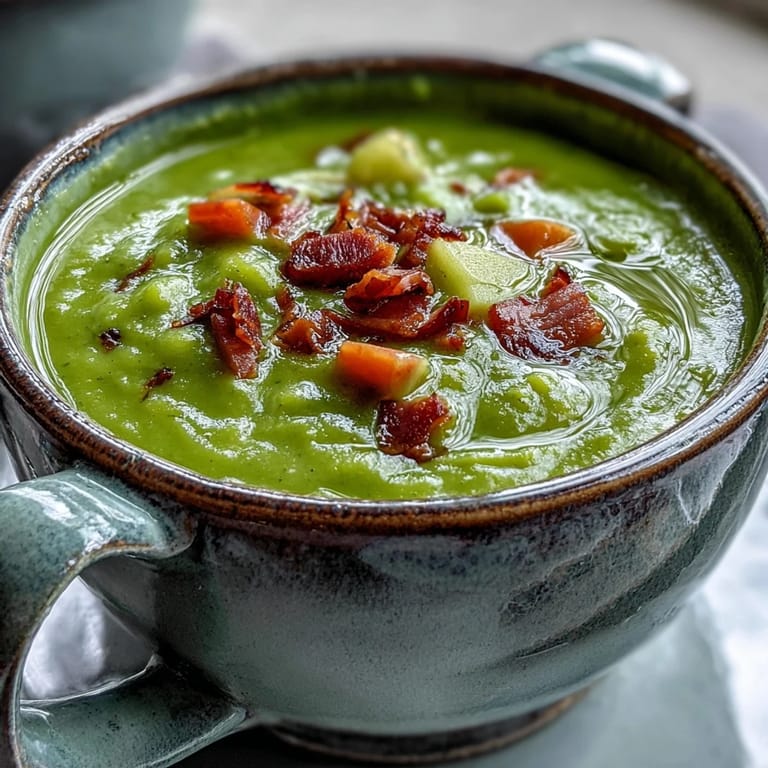
- Bring everything to a boil first, then immediately turn the heat down to low, cover the pot, and let it bubble gently for about an hour, stirring occasionally to make sure nothing's sticking and to check that the transformation is actually happening. You'll know it's done when the peas have completely broken down and the whole thing looks creamy and thick.
- Remove what doesn't belong:
- Fish out the bay leaf and any ham bone—if you're using diced ham instead, stir it back in now so it mingles with everything else.
- Make it creamier (optional but worth it):
- If you want that velvety texture without actual cream, use an immersion blender to partially puree the soup, or carefully blend half of it in a blender and stir it back in—this creates a texture that's creamy and chunky at the same time, which somehow works perfectly.
- Final tasting:
- Season with salt and pepper to taste, remembering that broth already has salt in it, so go slow and taste as you go instead of ending up with something that needs a gallon of water to fix.
 Pin it
  Pin it
 My grandmother never wrote down her split pea soup recipe, and for years I tried to recreate something I could only half remember—too thick, too thin, missing something I couldn't name. What I finally realized was that she wasn't making it from a recipe at all; she was making it from years of knowing what her family needed on cold days, and that kind of knowledge can't be bottled or measured.
The Vegan Transformation
If you're skipping the ham, add a teaspoon of smoked paprika to the pot when you add the peas—it gives you that deep, savory smokiness without any animal products, and honestly, some people prefer it this way because it lets the natural pea flavor shine through instead of being overshadowed by ham. I've served this version to vegetarians and omnivores alike, and nobody's ever complained or asked where the meat went, which feels like the highest compliment.
Reheating and Storage Secrets
This soup keeps beautifully in the fridge for up to five days, and it actually tastes better on day two or three after the flavors have had time to get to know each other. When you reheat it, the soup will be thicker than you remember, so add water or broth gradually until you reach the consistency you want—it takes a few minutes to warm through, and that's the perfect time to make some crusty bread or just stand there and enjoy the smell.
What to Serve It With and When to Make It
Pair this with crusty bread that you can actually dunk, because a spoon-only approach misses the whole point of what this soup wants to be. It's the kind of meal that works for lunch on a random Tuesday, dinner when you haven't planned anything, or that thing you bring to someone who needs feeding but might be too tired to actually cook. If you ever find yourself with a bottle of dry Riesling or Pinot Noir hanging around, pour a glass alongside the soup and pretend you're in a cozy restaurant instead of your own kitchen, because that's kind of the whole thing, really.
- Make it the day before you need it so you have one less thing to think about when life gets busy.
- Freeze extras in individual containers so future you has something nourishing ready to go on difficult days.
- Serve it in bowls that hold heat well, because there's something deeply satisfying about wrapping your hands around a warm bowl.
 Pin it
  Pin it
 This soup has taught me that the best kitchen moments aren't about perfection or impressive technique—they're about showing up with ingredients you trust and the willingness to let something simmer while you do something else. That's where the real magic happens.
Recipe FAQs
- → Do I need to soak split peas before cooking?
No soaking required. Split peas naturally break down during simmering, creating the soup's characteristic creamy texture without pre-soaking.
- → Can I freeze this soup?
Yes, it freezes exceptionally well. Cool completely, portion into airtight containers, and freeze for up to 3 months. Thaw overnight in the refrigerator.
- → How do I achieve a smoky flavor without meat?
Substitute smoked paprika for the ham. Start with one teaspoon and adjust to taste, adding liquid smoke if additional depth is desired.
- → Why is my soup too thick?
Split peas continue absorbing liquid as they sit. Simply warm with additional broth or water until reaching your preferred consistency.
- → What's the difference between green and yellow split peas?
Green peas offer an earthier, slightly sweeter profile, while yellow peas have a milder, nuttier taste. Both work beautifully in this preparation.